
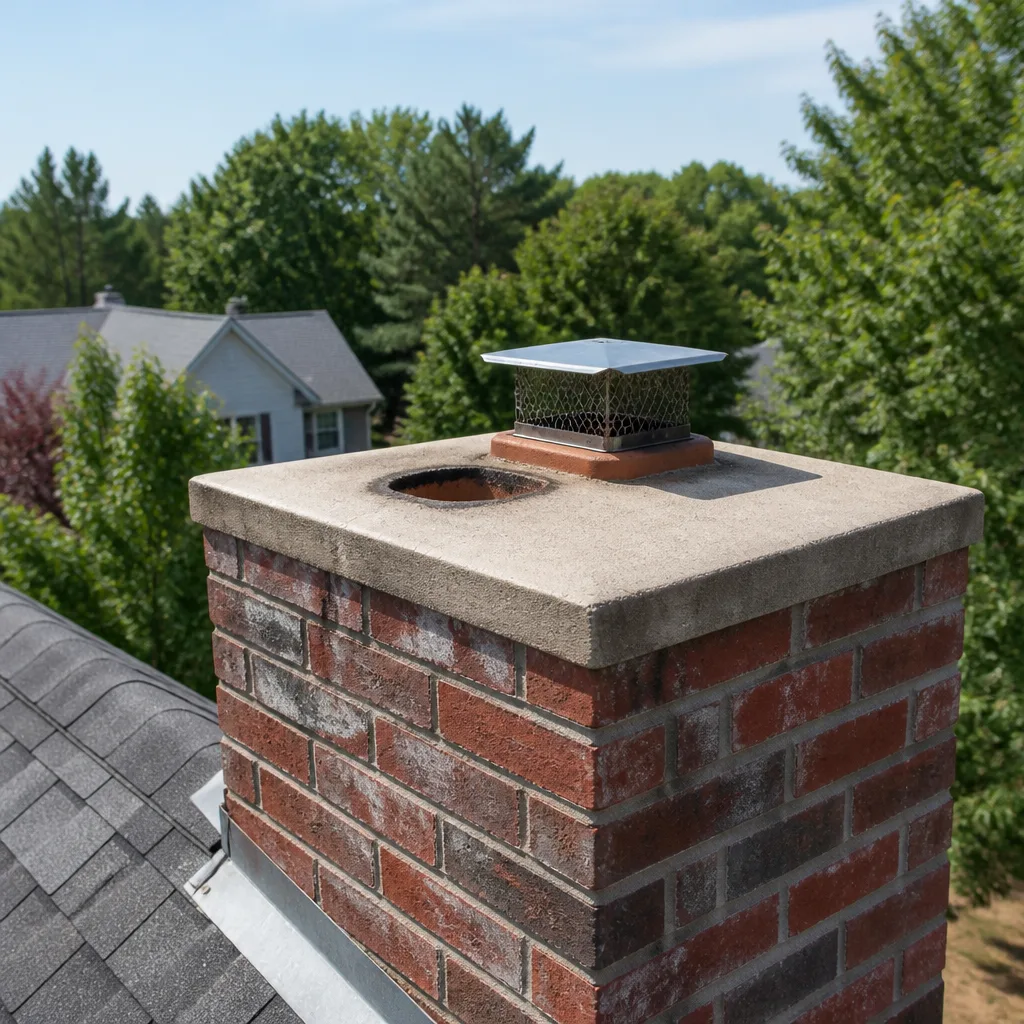
 Sweep & inspection
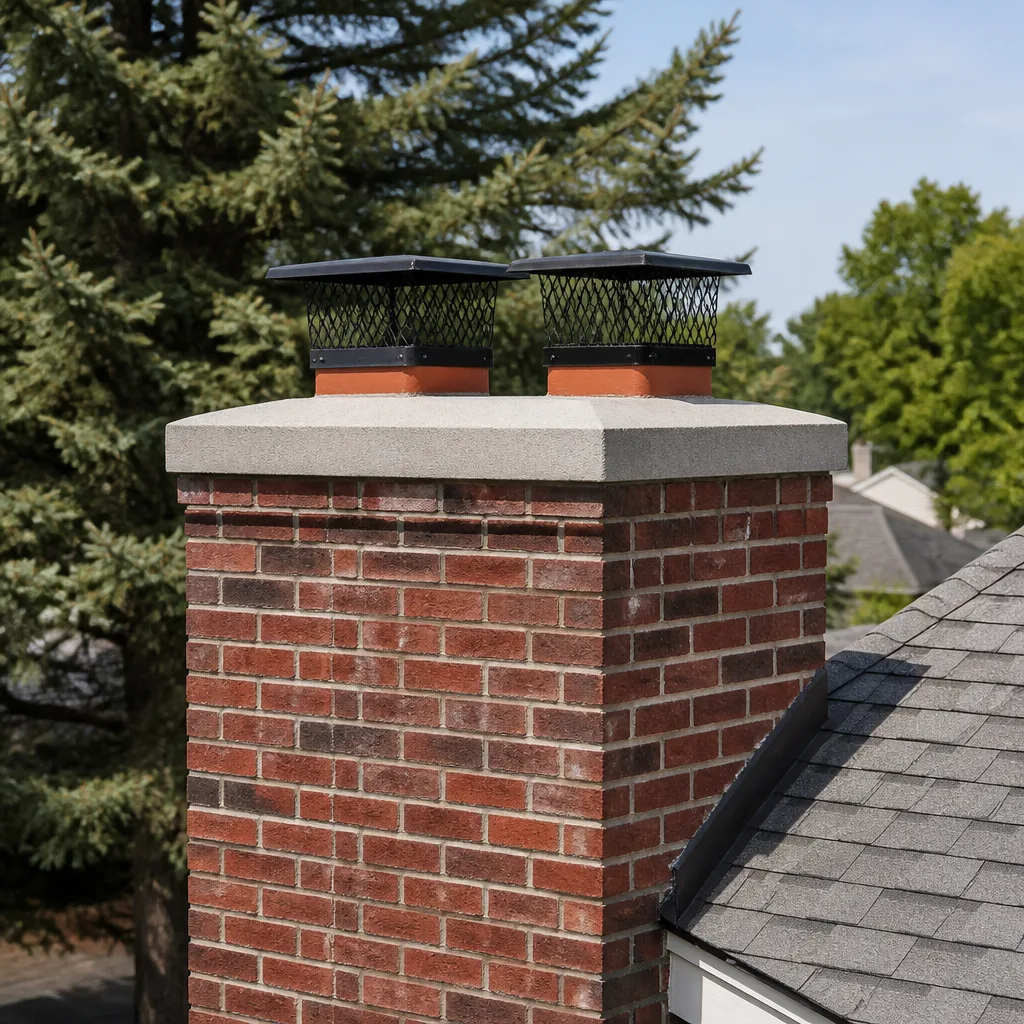 Caps & crowns
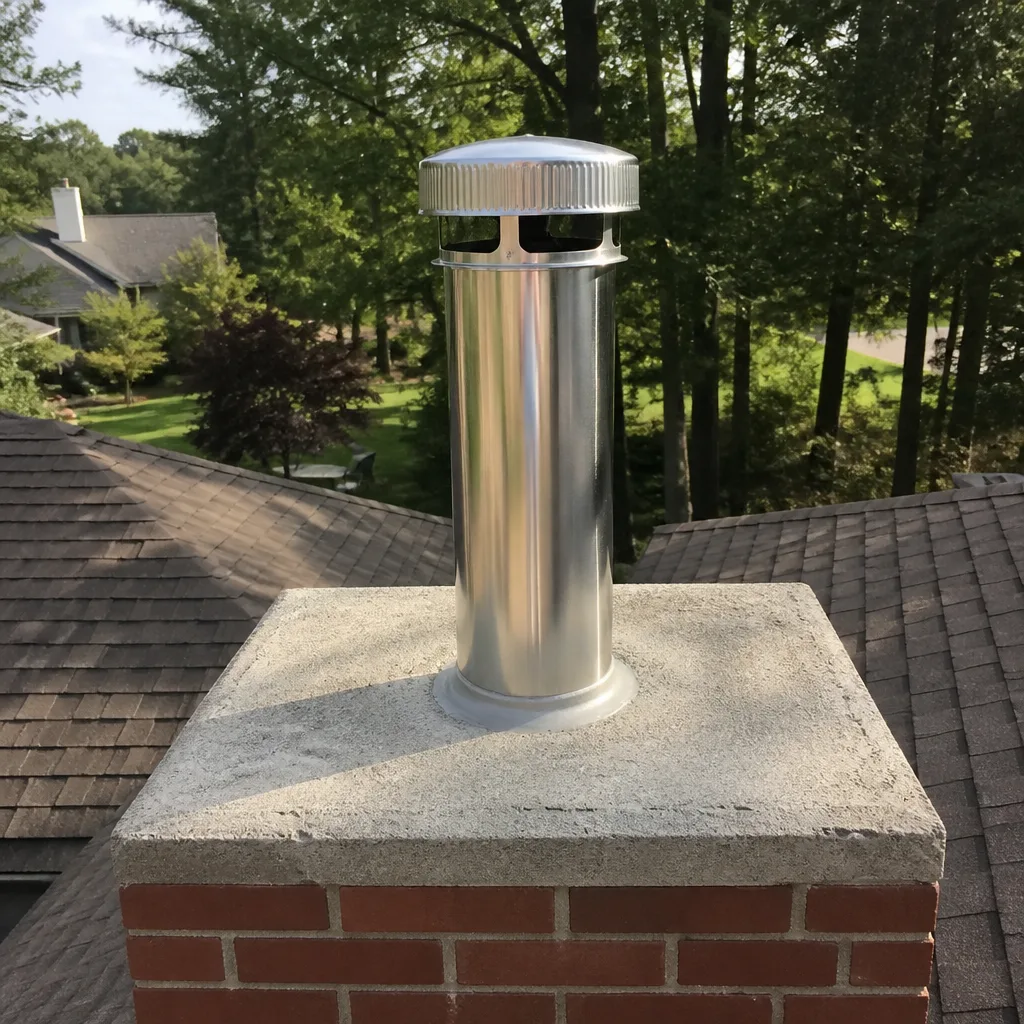 Flue relining
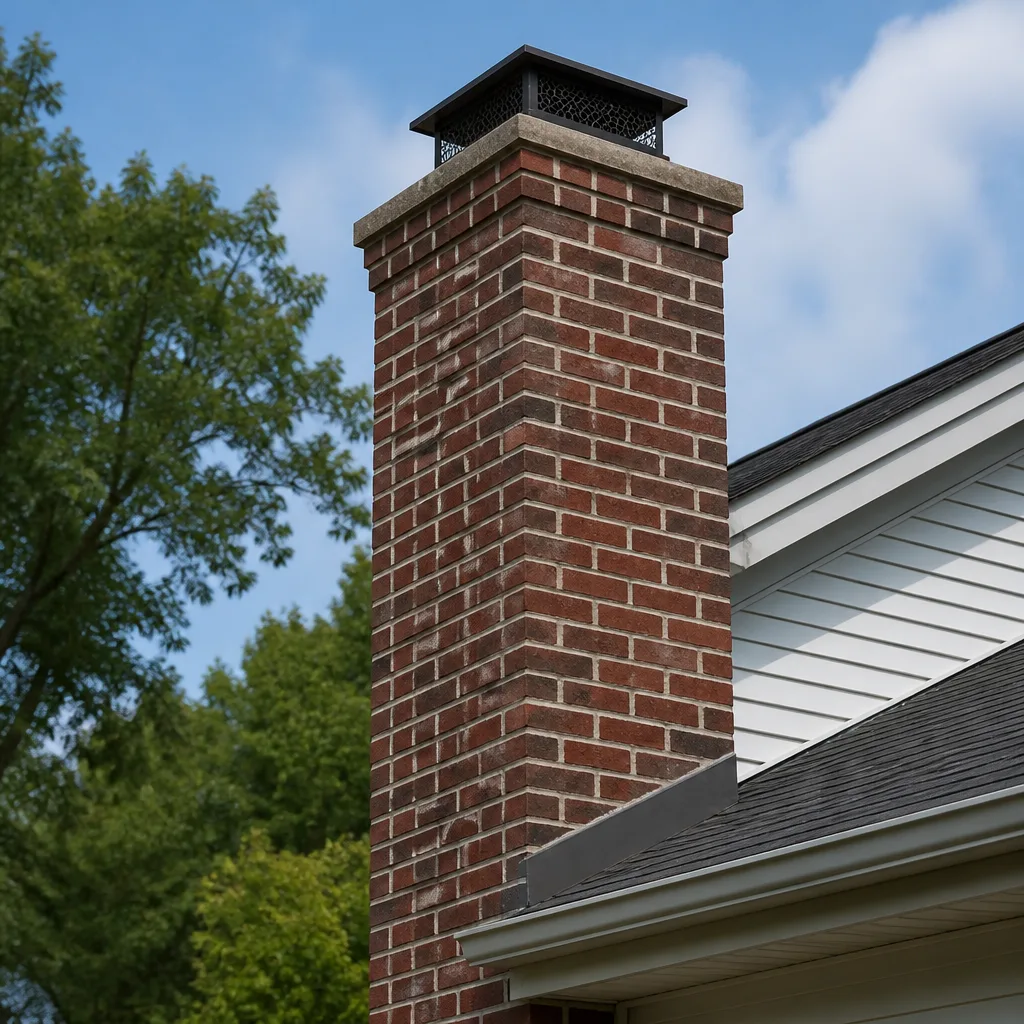 Masonry repair
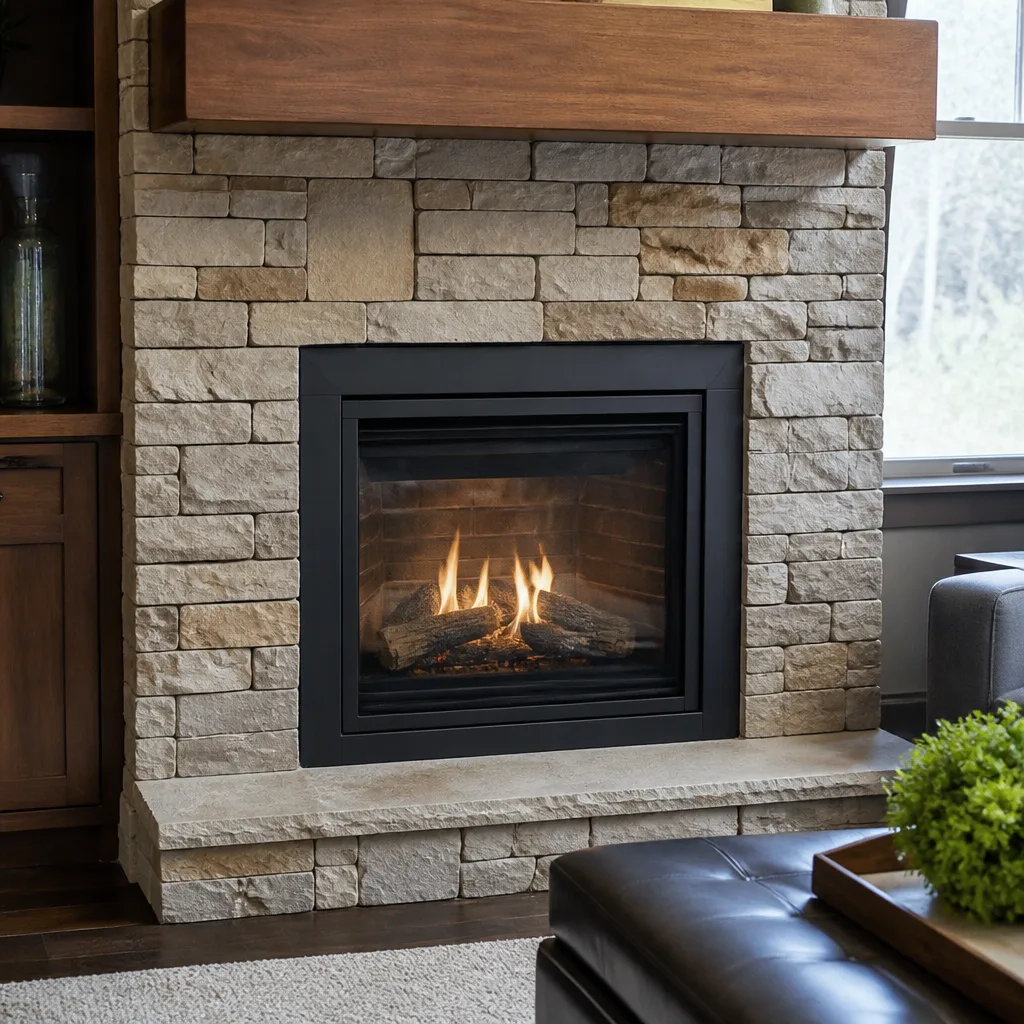 Gas fireplace service
Level 1 sweep and inspection to the NFPA 211 annual standard - flue, crown, cap, and flashing checked and photographed
Chimney sweep logs do not sweep chimneys. They loosen some creosote - which then falls where a brush and vacuum still have to collect it.
HeatShield Chimney Sweep in Dallas: What to Know First
HeatShield chimney sweep in Dallas typically runs $229 to $389 for a standard sweep with a Level 1 inspection, and we usually complete the job in 60 to 90 minutes. If your HeatShield liner system shows signs of wear, we’ll tell you exactly what we found, what it costs to address, and whether it can safely wait. Call (361) 264-4483 for a written quote before any work starts.
This page is for Dallas homeowners who already have a HeatShield resurfacing system or are considering one, and want to know how sweeping and maintenance work differently on a coated flue. Ruben Castellano and our crew have serviced HeatShield jobs across Lake Highlands, Preston Hollow, East Dallas, and the surrounding neighborhoods for well over a decade. As an independent HeatShield service provider, we’re not tied to the manufacturer’s sales pitch. We tell you what’s there, tell you what it costs, and do the work. That’s the whole job.
Key Takeaways:
- A HeatShield-coated flue still needs regular sweeping, but the coating changes what we watch for during the job.
- We inspect the coating itself every sweep, not just the creosote on top of it.
- You’ll get a written price before any work begins, and a written guarantee on any repair we make.
- Our techs are background-checked and identity-verified, and you’ll see their name and photo before they arrive.
How HeatShield Products Fail – and How We Fix Them
HeatShield is a cerfractory flue sealant that resurfaces deteriorated mortar joints inside a chimney. It works well, but it’s not indestructible. Here are the failure modes we see most often on HeatShield chimneys in Dallas homes, along with what we do about them.
- HeatShield Cerfractory Flue Sealant delamination at the smoke shelf. The smoke shelf area takes the most thermal shock and creosote accumulation. If the coating wasn’t fully cured or the original surface prep was incomplete, we see bubbling and flaking there within three to five years. Our fix: we remove loose material, assess the underlying masonry, and determine if a spot repair is viable or if the flue needs a full re-coat.
- Creosote bonding over the HeatShield surface. HeatShield creates a smoother flue wall than bare masonry, but creosote still forms (that’s the tar-like buildup that causes chimney fires). The issue: glaze creosote sticks differently to a cerfractory surface, and aggressive scraping can gouge the coating. We use chemical treatments and softer mechanical methods on HeatShield jobs, never wire-brush hard scraping that would shorten the coating’s life.
- Moisture intrusion at the crown pushing behind the HeatShield layer. This is the one most owners don’t see coming. A cracked chimney crown lets water travel down behind the HeatShield coating, and then the coating starts failing from the back side. The coating looks fine from below until it doesn’t. On every HeatShield sweep, we check the crown and flashing because water is the quiet killer of cerfractory liners in Dallas, where spring storms and freeze-thaw cycles in January do real damage.
- HeatShield joints at offset flue sections separating. Offset flues have angled sections where the coating was applied across a transition. Over time, thermal expansion and contraction pull at those transitions, and we often find hairline cracks there that don’t show up anywhere else. We probe those joints during inspection and document them with photos so you can see what we see.
- Improperly specified HeatShield application thickness. HeatShield needs the right number of coats to perform, and we occasionally encounter systems where a previous contractor skimped. When we sweep, we can measure coating thickness in spots and flag areas that don’t meet the spec. That’s the kind of thing a manufacturer’s brochure won’t tell you to check.
Styles & brands we work with
Our HeatShield Chimney Sweep Process
Here’s exactly what happens when you call us for a HeatShield chimney sweep in Dallas, from the first phone call to the moment we pack up.
- 1
Call and booking. A live person answers and schedules your sweep. You’ll get the technician’s name and photo by text or email before the visit, and they’ll show a photo ID badge when they arrive.
- 2
Arrival and setup. We lay down drop cloths, set up our HEPA-filtered vacuum, and do a visual check of the firebox, damper, and chimney exterior before anything gets touched.
- 3
HeatShield coating assessment. Using a chimney camera, we inspect the full flue length, paying particular attention to coating adhesion, smoke shelf condition, and any cracks or separations. You can watch the footage with us if you want.
- 4
Sweep. We remove creosote and soot using methods that respect the HeatShield surface. No hard wire scraping that would damage the cerfractory layer.
- 5
Report and written quote. If we find issues, you get photos, a plain-English explanation, and a written price for any recommended work. No work happens without your approval.
- 6
Cleanup and guarantee. We leave the firebox cleaner than we found it. Every repair we make carries a written guarantee, and if it fails within the coverage period, the second visit is free.
See the difference
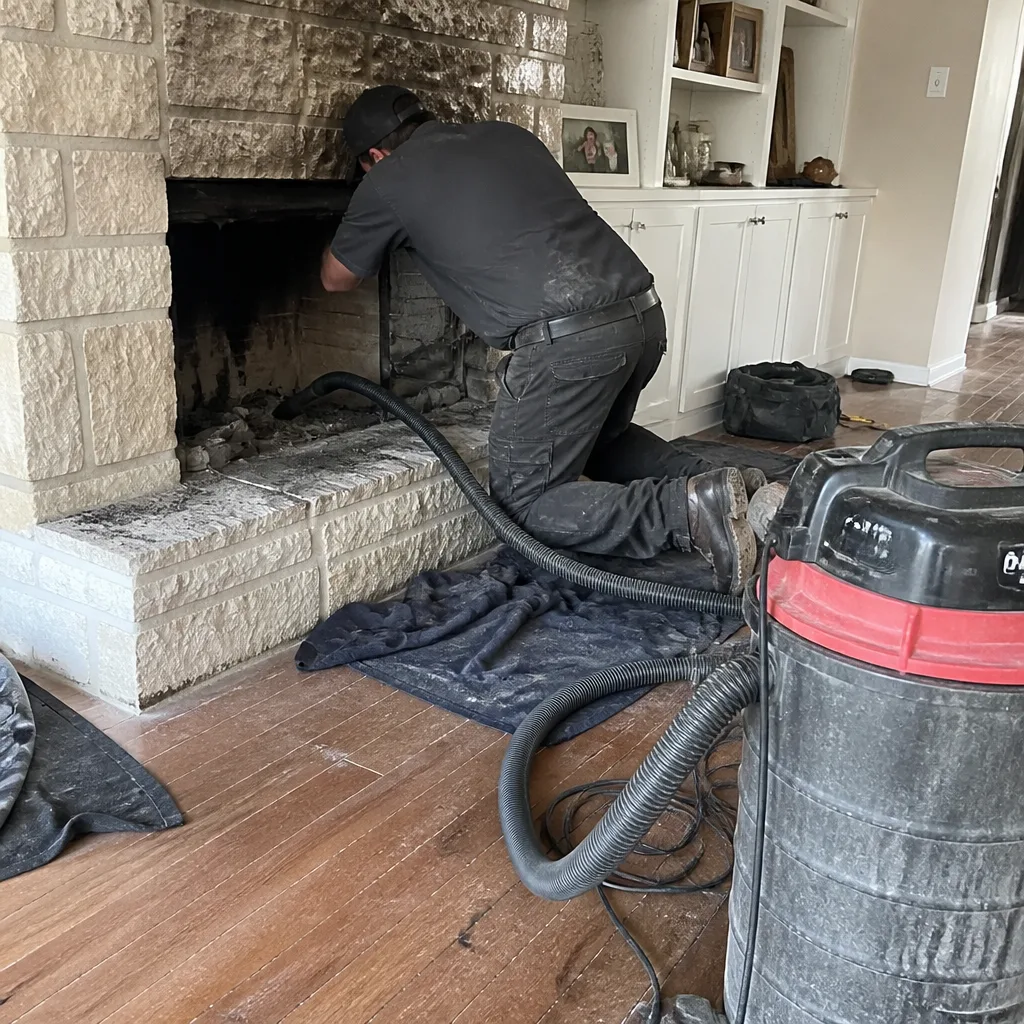 Before
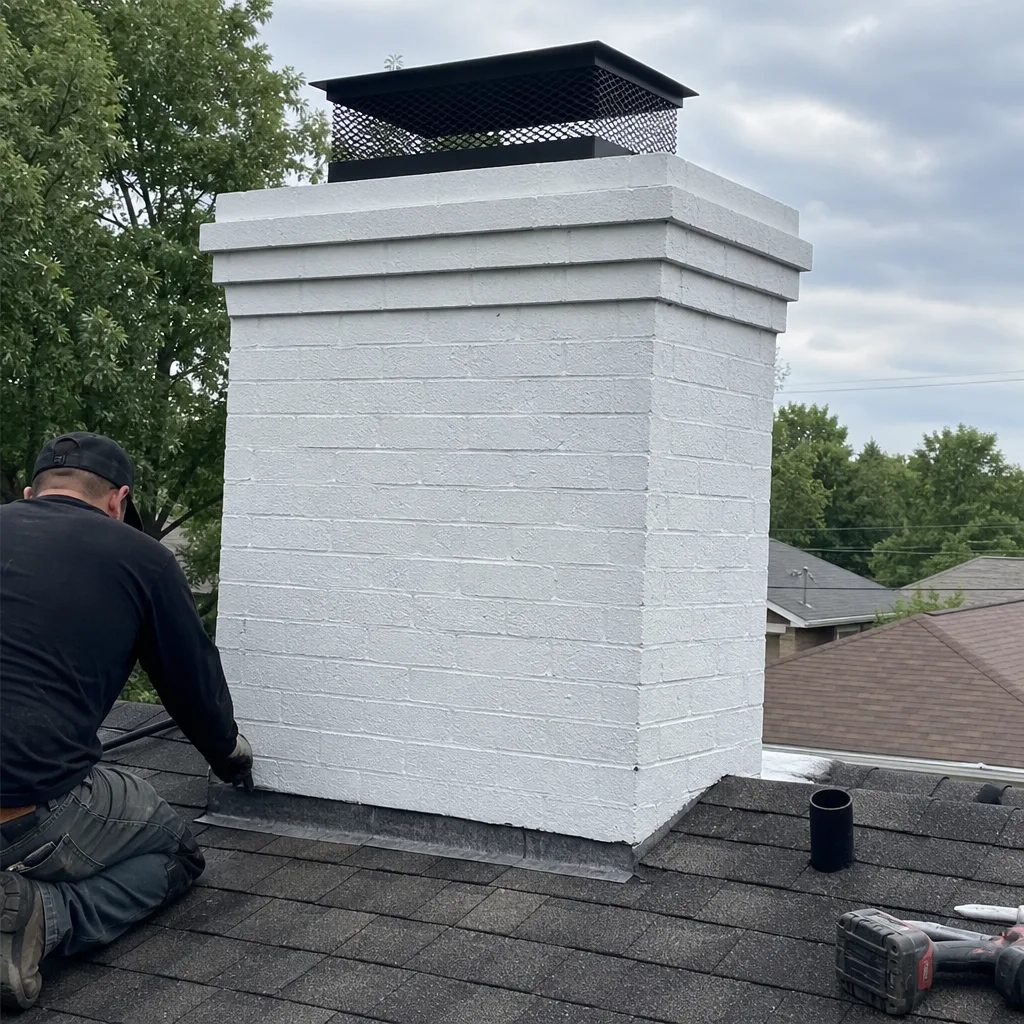 After
After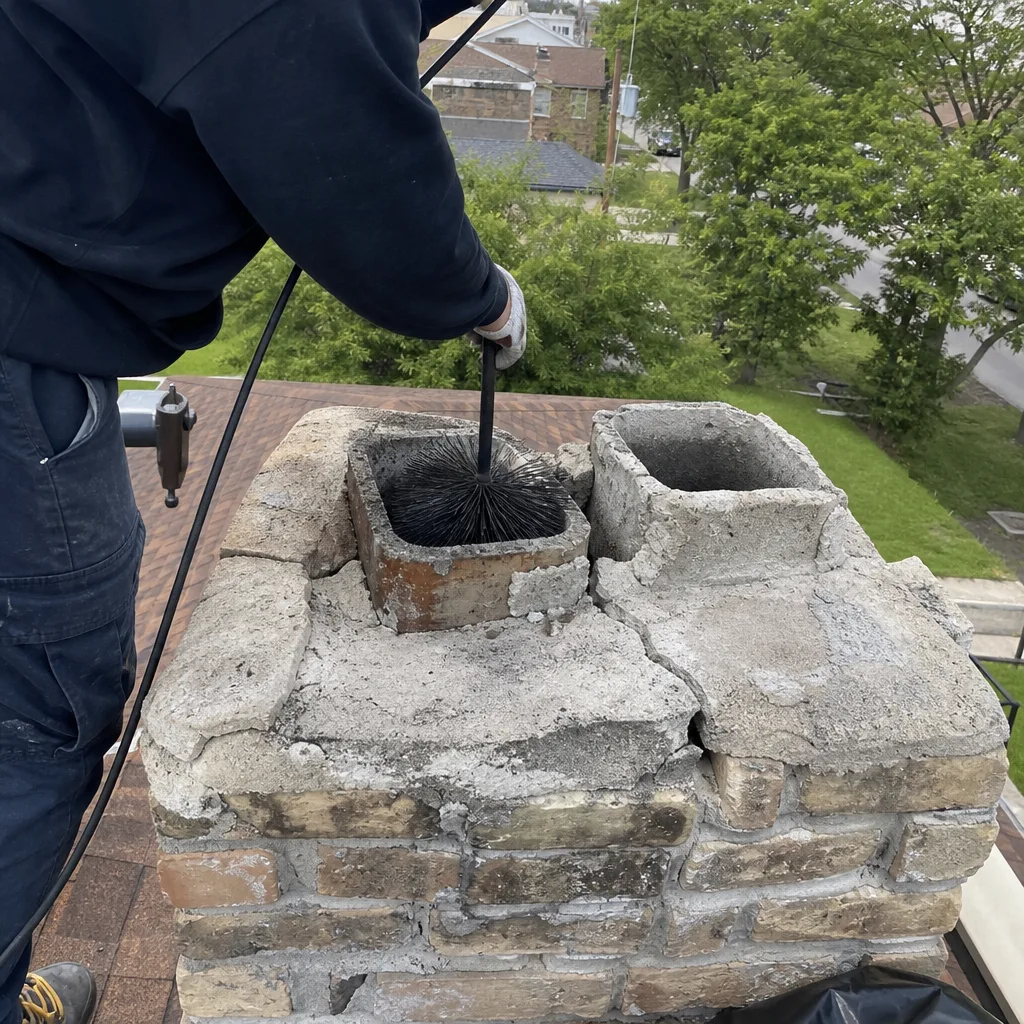 Before
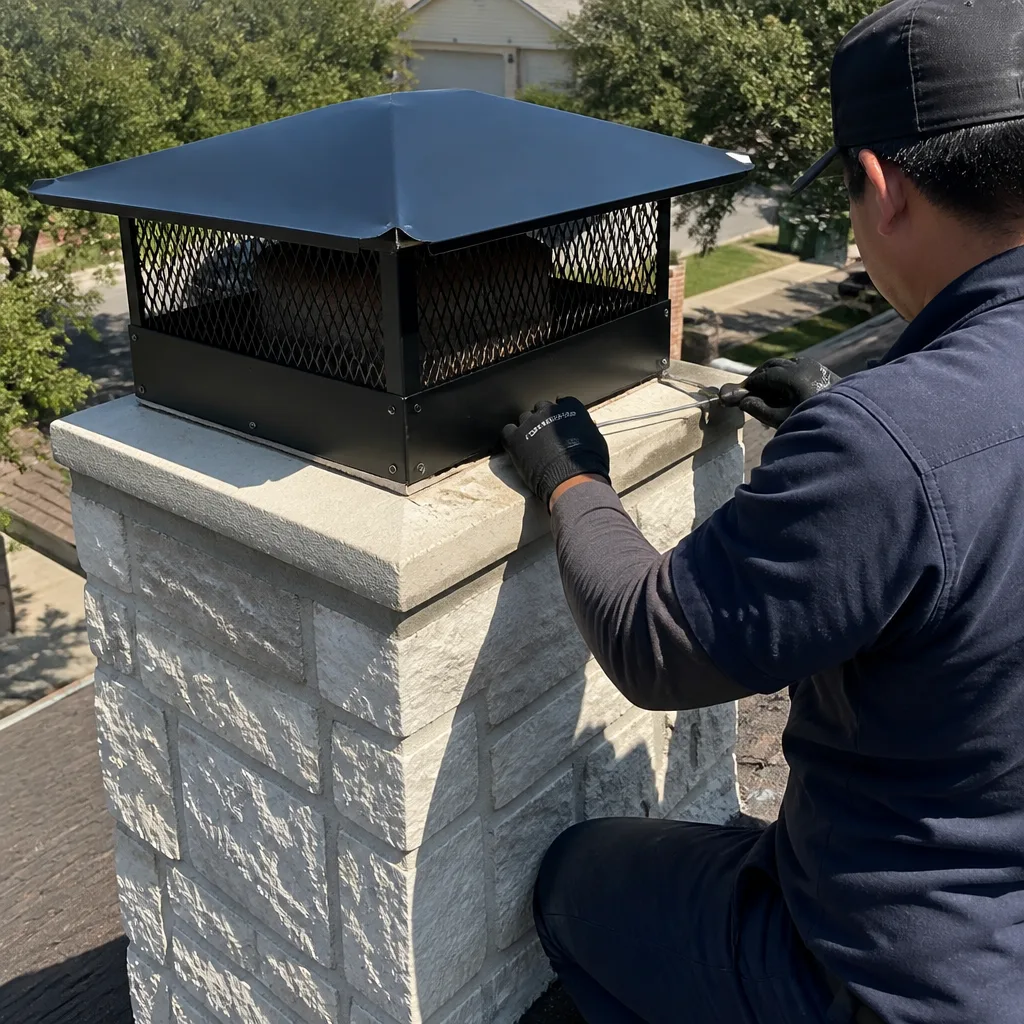 After
After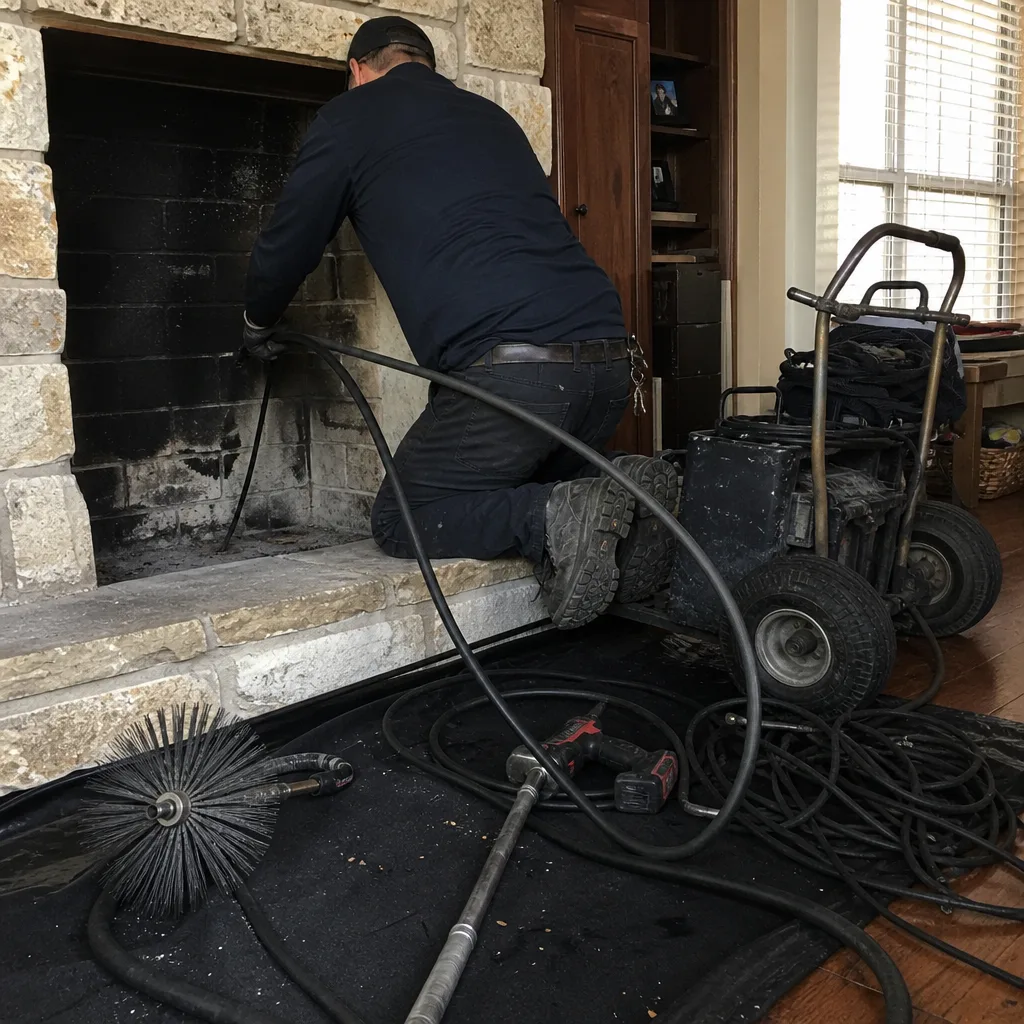 Before
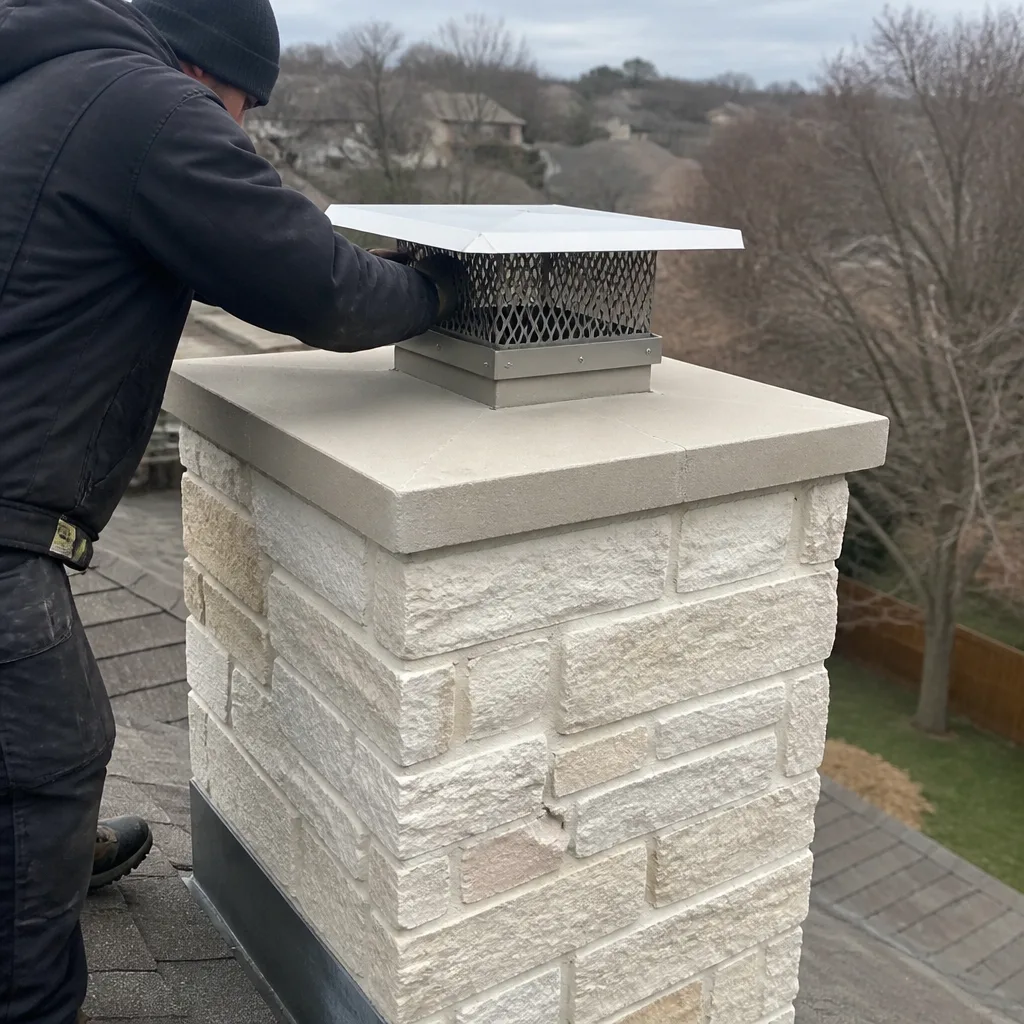 After
AfterWhat HeatShield Chimney Sweep Costs in Dallas
Here’s what HeatShield owners in Dallas can expect to pay for common service scenarios. These are real ranges, not teaser prices.
| Service | Typical Cost in Dallas |
|---|---|
| Standard chimney sweep with Level 1 inspection | $229 – $389 |
| Sweep plus Level 2 camera inspection (recommended for HeatShield) | $349 – $549 |
| HeatShield spot repair (small delamination area) | $450 – $850 |
| HeatShield full flue re-coat (single flue, standard height) | $2,800 – $4,500 |
| Crown repair or replacement (common on HeatShield homes) | $600 – $1,400 |
What moves the price: flue height, roof pitch and access difficulty, thickness of creosote buildup, and whether the HeatShield coating needs spot work or a full reapplication. Older two-story Dallas homes in Lakewood or M Streets with steep roofs cost more to access than a single-story ranch in Richardson. Call (361) 264-4483 and we’ll give you a written quote. Estimates are free.
Why Dallas Homeowners Call Alcott Chimney Dallas for HeatShield Work
We’ve been servicing chimneys in Dallas since 2002, and HeatShield has been part of that work since the product became common in this market. Before any technician steps onto your property, they’ve passed a background check and identity verification under the Threshold Standard, and you’ll know their name and see their photo before they knock. Every job gets a written price before work starts, and every repair carries a written guarantee. If the repair fails within the coverage period, we come back free.
We’re also not married to one product line. While we service and install HeatShield, we also work with DuraFlex liner systems and Gelco products, which means our recommendation comes from what’s actually right for your chimney, not what’s sitting on a shelf in the van. If your HeatShield coating is beyond a reasonable repair, we’ll tell you that plainly, and we’ll show you the camera footage so you can verify it yourself.
FAQs
No. Regular sweeping by a qualified professional does not void a HeatShield warranty. In fact, skipping sweeps leads to the creosote buildup and moisture damage that cause the coating to fail, which is exactly what warranties don’t cover. We’re an independent HeatShield service provider, so we work on these systems without any interest in protecting or blaming the manufacturer. Call (361) 264-4483 to schedule a sweep that includes a coating inspection.
Once a year if you burn regularly, same as any other chimney. Dallas homes that burn mostly during the short winter season still need annual sweeping because creosote forms fastest during low, slow fires, which is how most people burn here. If you use manufactured logs or a lot of green wood, twice a year isn’t unreasonable.
Sometimes, yes. If the delamination or cracking is localized to a small area, usually at the smoke shelf or a single offset joint, a spot repair is possible. If the coating has separated across large areas or water has gotten behind it, a full re-coat or liner replacement is the honest answer. We’ll show you the camera footage before we recommend either path. Call (361) 264-4483 for a free estimate.
Our typical booking window is three to seven days for a sweep that isn’t tied to a time-sensitive safety issue. If your chimney smells like smoke or you’re seeing coating fragments in the firebox, call (361) 264-4483 and describe what you’re seeing. We’ll tell you whether it can wait for a regular appointment or needs priority attention.
Creosote builds up, and creosote is what catches fire in chimney fires. On a HeatShield system, you also lose the opportunity to catch early coating failures while they’re cheap to fix. A small delamination caught during a $300 sweep costs a few hundred dollars to repair. The same problem a year later can mean a $3,000-plus re-coat. If you can’t remember the last time the flue was looked at, call (361) 264-4483 and get it on the calendar.
Written by Ruben Castellano, Owner, Alcott Chimney Dallas at Alcott Chimney Dallas, serving Dallas and nearby areas.