
Last updated October 15, 2026
 Sweep & inspection
 Caps & crowns
 Flue relining
 Masonry repair
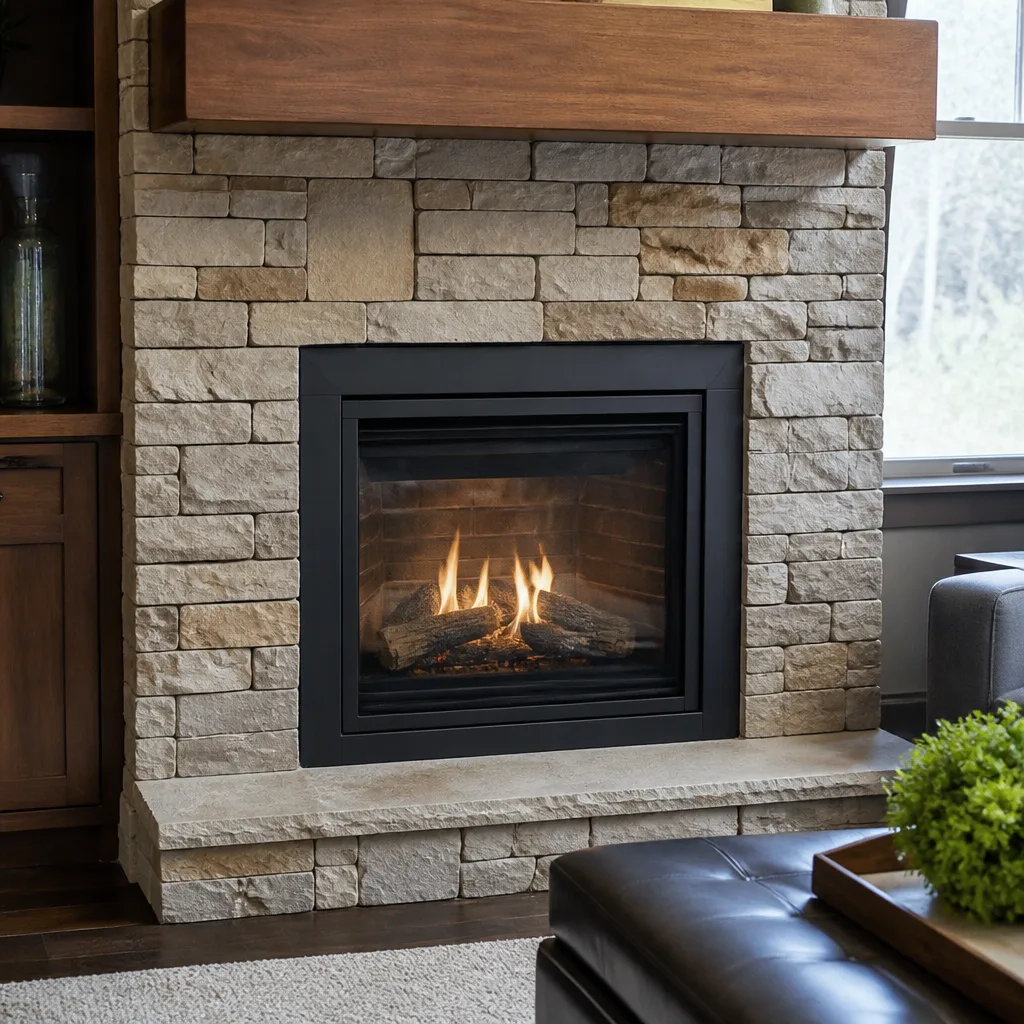 Gas fireplace service
Level 1 sweep and inspection to the NFPA 211 annual standard - flue, crown, cap, and flashing checked and photographed
Chimney sweep logs do not sweep chimneys. They loosen some creosote - which then falls where a brush and vacuum still have to collect it.
DIY vs Professional Chimney Cleaning: The Dallas Homeowner’s Decision Guide
You can buy a chimney brush kit on Amazon for $40 and physically move creosote deposits. What you can’t do with that kit is see whether you’ve removed enough, whether your liner is cracked behind the deposits, or whether you’ve dislodged debris into a blockage further down the flue. That’s the real line between DIY and professional chimney cleaning in Dallas, and it’s a line most guides never draw with any precision-unlike our How to Hire a Chimney Cleaning Contractor in Dallas: A Step-by-Step Guide. This one will. By the time you finish reading, you’ll know exactly which parts of chimney maintenance are reasonable to do yourself, which parts genuinely require professional equipment, and what each path actually costs in Dallas.
Styles & brands we work with
Quick Answer
DIY chimney cleaning is reasonable for light surface soot and visual inspections of the firebox, but professional cleaning in Dallas is the right choice whenever creosote has built to Stage 2 or beyond, when you burn wood more than twice a week, or when the fireplace is more than 10 years old. A professional sweep in Dallas typically costs $180 to $340 for a standard wood-burning fireplace, and the equipment a professional uses (video inspection cameras, rotary cleaning systems, stage-specific removal tools) reveals conditions a homeowner’s brush and flashlight cannot. The smartest approach for most Dallas homeowners is professional cleaning once a year, with simple DIY maintenance between visits to extend the value of that cleaning. For what that maintenance should cover seasonally, see our Seasonal Chimney Cleaning Care for Dallas: Year-Round Homeowner’s Guide.
Table of Contents
- What a Competent DIYer Can Actually Maintain
- What Professional Equipment Sees That Your Flashlight Doesn’t
- When DIY Is a Reasonable Cost-Saving Option
- When DIY Becomes Genuinely Risky
- The Real Cost Comparison: DIY vs Professional in Dallas
- How to Use DIY Maintenance Between Professional Visits
- Understanding Creosote Stages (And Why They Matter)
- Common Mistakes to Avoid
- When to Call a Professional
- Frequently Asked Questions
- The Bottom Line
What a Competent DIYer Can Actually Maintain
Let’s be honest about what a homeowner with basic tools and a working ladder can reasonably handle. The answer is more than you might expect, but the list is specific, and it doesn’t include deep flue cleaning. Here’s what we tell Dallas homeowners they can safely maintain themselves between professional visits.
1. Damper Lubrication and Operation Check
The damper is the metal plate that opens and closes the flue. In Dallas, where summer humidity alternates with winter drying cycles, damper hinges corrode faster than you’d think. You’ll know it’s sticking when the handle feels stiff or makes a grinding sound. To maintain it: open the damper fully, wire-brush any surface rust off the hinge points, apply a high-temperature graphite lubricant (never WD-40, which burns off and leaves a residue), and work the mechanism open and closed five or six times. If the damper won’t seal completely when closed, that’s a professional repair, not a maintenance item. A damper that leaks lets conditioned air escape up the chimney year-round, which in a Dallas summer can add $15 to $30 a month to your cooling bill.
2. Cap and Screen Visual Check
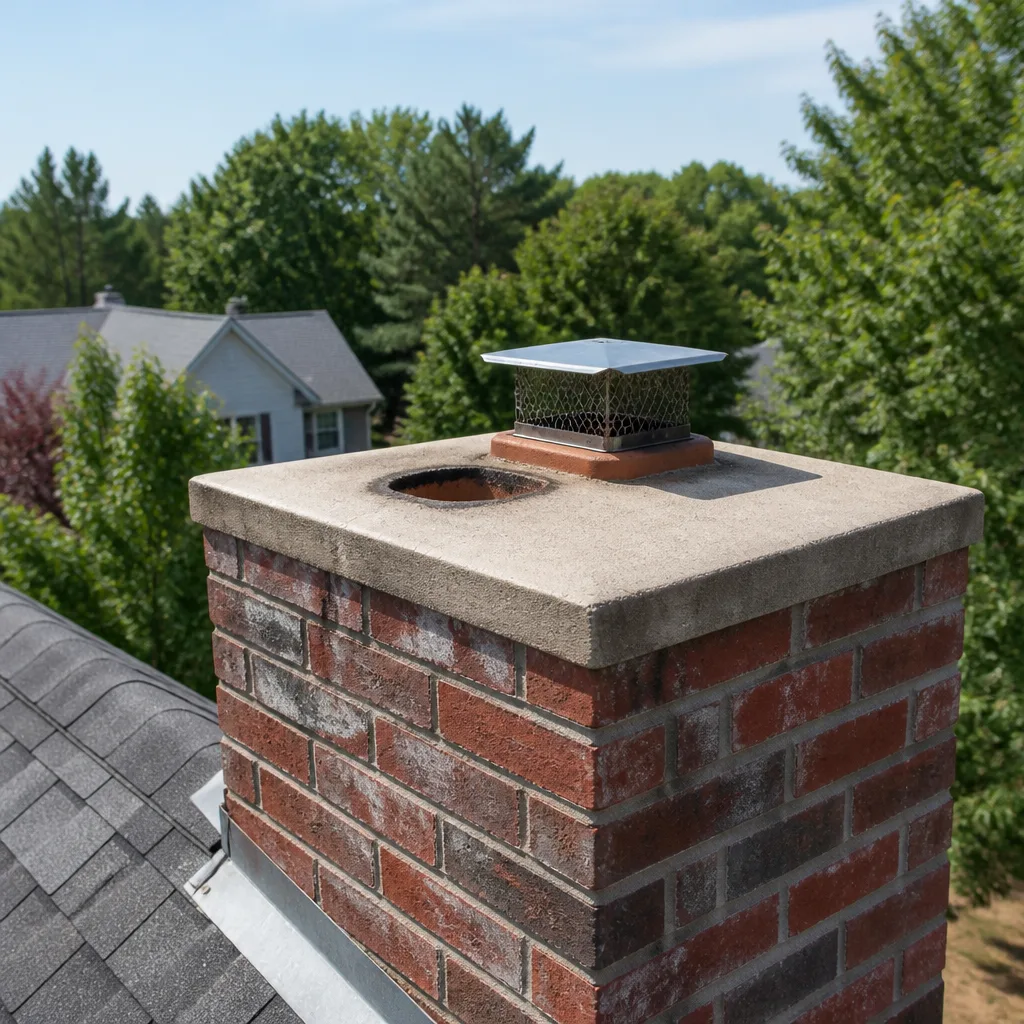
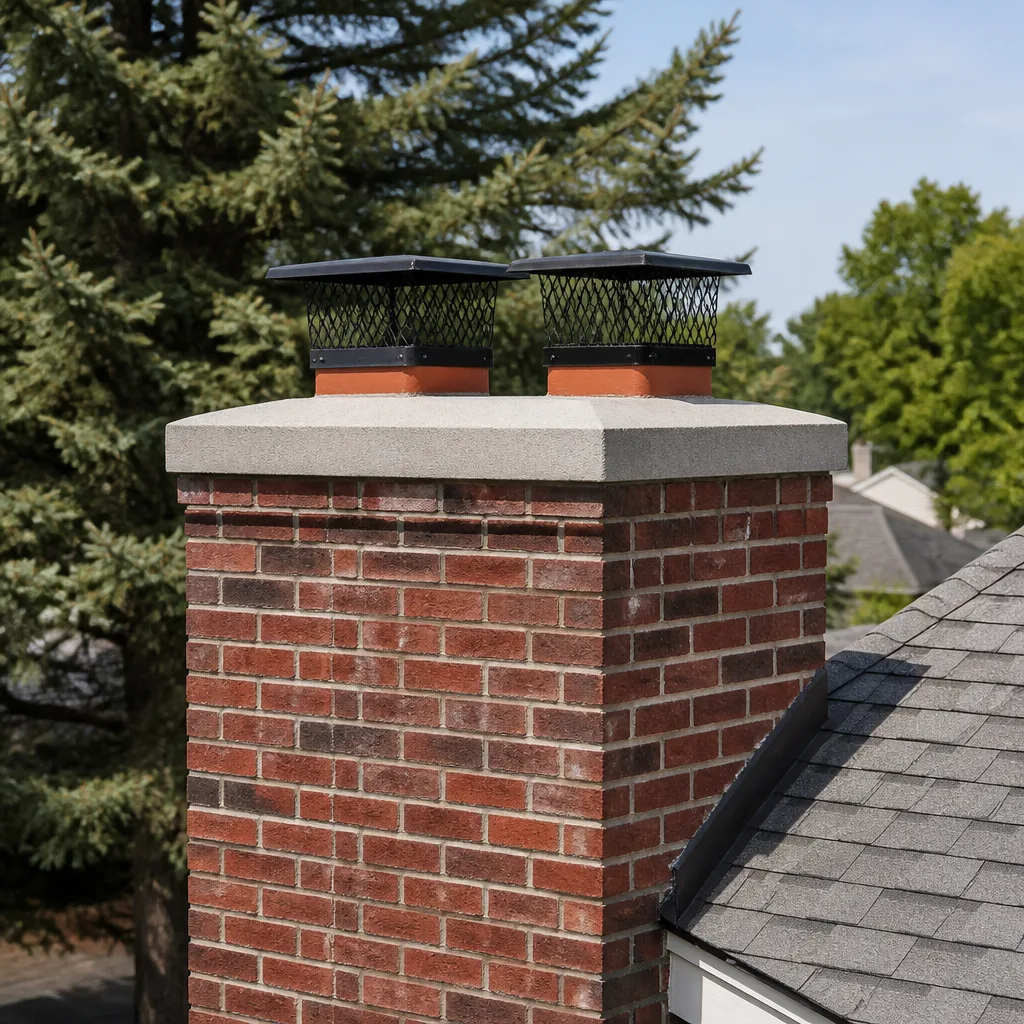
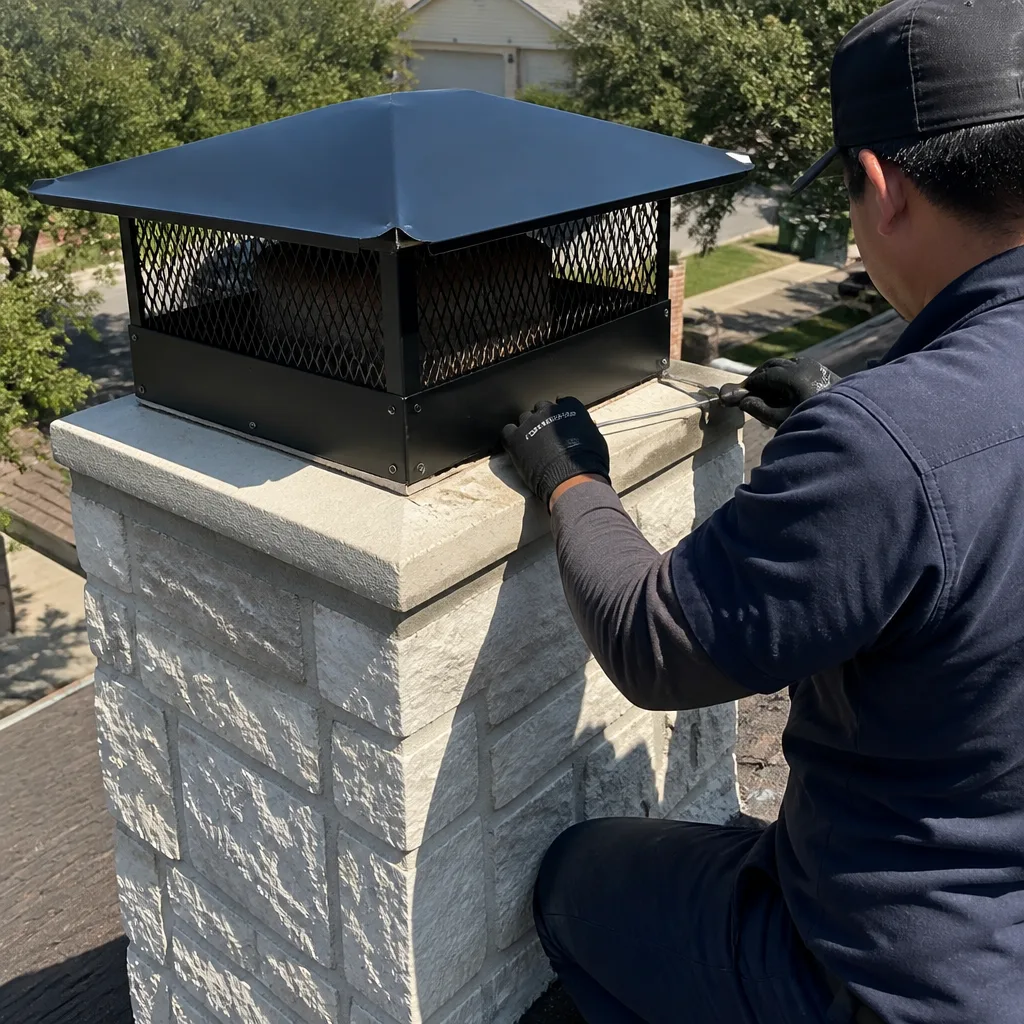
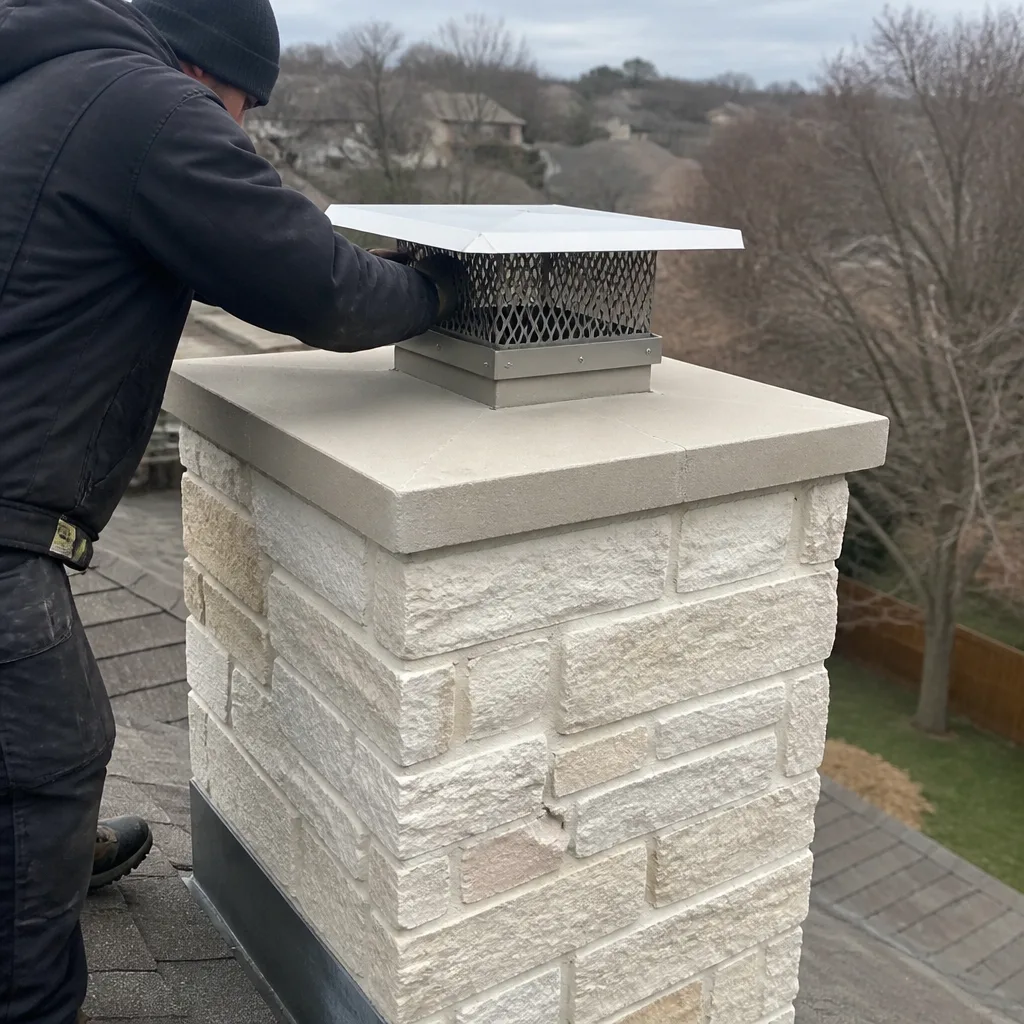
Every Dallas chimney should have a cap: a metal covering with mesh sides that keeps rain, birds, squirrels, and leaves out of the flue. Check it from the ground with binoculars. Look for missing or torn mesh, rust-through, or a cap that’s tilted or missing entirely. A damaged cap in Dallas is an urgent item because the city’s squirrel population will find its way into an uncapped flue, and removing a squirrel nest from a chimney costs more than replacing the cap. If the cap looks intact but you’re not sure, that’s a camera inspection question, not a ladder question.
3. Firebox Visual Inspection
The firebox is the brick or stone chamber where the fire actually burns. Inspect it cold, with a bright flashlight. What you’re looking for: crumbling mortar joints, cracked firebrick, a rusted or warped grate, or white staining (efflorescence) that signals water intrusion. Small hairline cracks in firebrick are normal and usually cosmetic. A crack wide enough to fit a dime, or any section of wall that moves when you press on it, means the firebox needs masonry repair before the next fire. This is also the moment to check the hearth extension in front of the fireplace for cracks, since a burning ember landing on cracked hearth material is how house fires start.
4. Smoke and Odor Monitoring
Between professional cleanings, you should be watching how your fireplace behaves. Smoke that rolls into the room instead of up the flue, a campfire smell that lingers for days after a fire, or visible black flakes falling into the firebox during a burn are all signs that creosote is building and airflow is restricted. These are not signs to keep burning. These are signs to book a sweep. A fireplace that drafts well and leaves no lingering odor is a fireplace that’s probably safe to continue using until its next scheduled cleaning.
What Professional Equipment Sees That Your Flashlight Doesn’t
Here’s the part of the DIY-versus-professional debate that most guides skip, and it’s the part that actually matters. The limitation of DIY chimney cleaning isn’t effort or skill. It’s sensory. A brush reaches the creosote, but a brush cannot tell you whether it removed enough, and a brush cannot tell you what’s behind the creosote. Professional equipment exists to solve exactly that problem.
Video Inspection Cameras: The Difference Between Guessing and Knowing
A professional camera inspection runs a high-resolution camera down the entire length of the flue, from the firebox to the cap. The camera sees every inch of the liner surface in real time. What it’s looking for: hairline cracks in clay tile liners that a flashlight, even a strong one, can’t resolve from below; missing mortar joints between tiles; rust-through in metal liners; and the exact thickness and stage of creosote deposits at every point in the system. In our experience sweeping chimneys across Dallas, somewhere between 10 and 20 percent of homes we inspect have a condition which, without the camera, would have gone completely undetected. That’s not a scare tactic. It’s the difference between a visual inspection from below and a camera inside the flue.
Creosote Staging: What the Three Stages Actually Mean
Creosote, the tar-like residue that builds up when wood smoke cools and condenses on the flue walls, accumulates in three recognized stages. A professional inspects the deposits to identify the stage because the cleaning method and the urgency both depend on it. Stage 1 is light, flaky soot that brushes off easily with a standard wire brush. Stage 2 is thicker, crystalline, and crusty, and it typically requires rotary cleaning heads with metal chains to remove. Stage 3 is concentrated, glass-like, hard tar that sometimes requires chemical treatment, thorough mechanical removal, or in severe cases a different approach entirely. You cannot see the back side of a creosote deposit from below with a flashlight. You can only see the bottom edge of it. The camera sees the profile.
Liner Crack Detection: The Condition No Brush Reveals
Clay tile liners are the most common liner type in Dallas homes built before 1990. They crack. They crack because of thermal stress from repeated heating and cooling cycles, they crack because of chimney fires that homeowners didn’t know they had, and they crack because of moisture freeze-thaw cycles during Dallas’s occasional winter ice events. A cracked liner lets heat and gas escape the flue into the surrounding chimney structure, and a cracked liner is the leading cause of chimney-related house fires. A homeowner cleaning their own chimney cannot see a liner crack. Even a professional visual inspection without a camera frequently misses cracks, which is why so many sweeps recommend a camera inspection as part of any first visit to a home, and why the professionals we work with specify materials like DuraFlex for liner replacements, products engineered for this exact failure mode.
Rotary Cleaning Systems vs a Brush on a Rod
A homeowner’s brush kit uses a static brush head on flexible rods, spinning by hand or with a drill attachment. It removes loose Stage 1 soot reasonably well when the flue is smooth and straight. It does a poor job on Stage 2 deposits, it does almost nothing to Stage 3, and it struggles in flues with bends, offsets, or roughened tile surfaces. Professional rotary cleaning systems use spinning chain heads driven by a powerful motor that scrub the full surface area of the flue wall under consistent mechanical pressure. That’s not a snobbery distinction. It’s the same reason a power washer cleans concrete better than a garden hose. Some deposits genuinely require mechanical force rather than contact.
When DIY Is a Reasonable Cost-Saving Option
Now that we’ve drawn the line, here’s the honest part: there are specific conditions under which DIY chimney cleaning is a rational financial decision, and pretending otherwise would insult your intelligence. Those conditions are narrow, and they should be explicit.
Infrequent Use: The Gas Log or Decorative Fireplace
If you have a gas log set or a fireplace that gets lit three or four times a year for ambiance, not heat, your creosote buildup is minimal. Gas logs don’t produce smoke, which means they don’t produce creosote at all. In that situation, an annual professional cleaning isn’t really necessary. What you need is an annual inspection, which costs less, and what you can do yourself is keep the firebox clean and the damper operating. The DIY maintenance checklist above is genuinely sufficient for a decorative fireplace in a Dallas home that rarely sees flame. Where people get into trouble is assuming a wood-burning fireplace is being used lightly when it isn’t.
Heating-Only, Low-Frequency Wood Burning
If you burn wood only during the coldest six to eight weeks of a Dallas winter and only on weekends, you’re probably producing light Stage 1 creosote, and you’re producing it slowly. In our experience, a homeowner in that situation who runs a basic brush through the flue once or twice a season honestly does remove some of the risk, provided the flue is straight, the fireplace is not too old, and the homeowner is genuinely thorough. This is the narrow slice of situations where the $40 Amazon kit earns its keep. But understand what you’re buying: you’re buying time between professional cleanings, not a replacement for them. We’ve had customers in East Dallas who DIY-swept for years and kept their flues in Stage 1 condition, and we’ve had customers who DIY-swept for years and produced a thick Stage 2 shell they couldn’t see because the brush wasn’t reaching the back wall of a slightly offset flue. The difference was invisible to both of them.
New Construction or Post-Replacement Liners
A newer home in Dallas or a home that recently had a liner replacement with a professional product like Copperfield means the flue surfaces are smooth and uniform, which makes a DIY brush dramatically more effective. Smooth stainless liners resist creosote adhesion, and what little builds up comes off easily. In this specific condition, the DIY gap closes somewhat because the inspection risk is lower: new liners don’t have hidden cracks, and there’s no legacy deposit to worry about. You should still have a professional inspection every two to three years, but the cleaning itself is more like light maintenance.
When DIY Becomes Genuinely Risky
The dangerous gaps in DIY chimney cleaning are not about the brushing. They’re about the parts you cannot see and the situations where hidden conditions make brushing either useless or actively harmful. Here are the specific scenarios where a professional is not a luxury but the only responsible option.
Burning More Than Twice a Week in Winter
Dallas doesn’t have a six-month heating season, but many homeowners heat with wood from November through February, which means heavy use. Heavy use means Stage 2 creosote develops even with properly seasoned wood. A homeowner who burns fires most nights of the week is generating deposit faster than a hand brush removes it, and the deposits that remain harden into the crunchy, crystalline Stage 2 form that brushes can’t dislodge. This is the single most important decision point in this entire guide: if you’re a frequent wood burner, the professional cleaning is not optional. It’s cheaper than the alternative, and the alternative is either a chimney fire or a blocked flue pushing carbon monoxide into the house.
A Fireplace More Than 10 Years Old Without a Documented Inspection
Older fireplaces in Dallas have older clay tile liners, and those liners crack. If the fireplace is more than a decade old and you don’t have documentation of a recent professional inspection, the appropriate move is an inspection before you do anything else, including burning another fire. The reason is simple: a cracked liner isn’t something a cleaning will fix, but it is something a cleaning might disturb. If you brush a flue with a cracked liner and dislodge a piece of tile, you can create a blockage that makes the chimney more dangerous than it was before. A professional camera inspection answers the liner question permanently, and then you can decide from a position of knowledge rather than guesswork.
Signs of Animal Activity
Dallas has an active squirrel and bird population. If you’ve heard scratching in the chimney, seen nesting material in the firebox, or smelled something musty even when it’s dry, you may have a nest in the flue. Nests are not a cleaning issue; they’re a removal issue. A nest partially blocks the flue, which means a fire burns with poor draft, which means more smoke and more creosote, compounding quickly. Brushing a nest from below can compact it into a denser plug instead of removing it. Nest removal typically involves removing the cap and working from above. It’s also worth noting that bird nesting season in Texas runs from March through September, and several species that nest in chimneys, including chimney swifts, are protected under the Migratory Bird Treaty Act. A professional knows the regulations.
Any History of a Chimney Fire
A chimney fire can be dramatic (loud crackling, dense smoke, flames shooting from the top) or it can burn quietly and briefly at lower intensity. Both types cause damage. The extreme heat of a chimney fire, even a small one, can crack clay tile liners, warp metal liners, and separate flue sections. It also turns existing creosote into hardened Stage 3 scale that no homeowner brush will remove. If you know or suspect a past chimney fire, the chimney needs a professional camera inspection before another fire is lit. This is genuinely a safety-critical issue, not a preference question.
The Real Cost Comparison: DIY vs Professional in Dallas
Most cost comparisons between DIY and professional chimney cleaning miss the two largest real-world costs: your time and your liability. For a detailed breakdown, see our Chimney Cleaning Cost Breakdown: The Dallas Homeowner’s Reference for 2026. Here’s the actual arithmetic for a Dallas homeowner, using real market prices for the area.
The DIY Kit Breakdown
- A basic brush kit with rods: $40 to $75 on Amazon or at a hardware store
- A chimney brush sized to your flue (most kits include only one size, which may not match): $20 to $35 for a second brush head if needed
- A tarp or drop cloth for the firebox and hearth: $10 to $20
- A shop vac with HEPA filter (standard filters blow fine soot into your living room): $80 to $150 if you don’t already own one
- Protective gear (safety glasses, dust mask, gloves): $15 to $30
- Total equipment outlay for a first-time DIYer in Dallas: $165 to $310
Add to that roughly half a day of your time, because the first cleaning includes setup, learning the process, cleaning because you’re going slowly, more cleaning because the soot escaped the tarp, and then deep-cleaning the living room. At a conservative Dallas professional-rate valuation of $40 an hour for skilled time, half a day is $160. Your true first-year DIY cost is $325 to $470, which is approximately what a professional cleaning costs in Dallas, except the professional cleaning includes an inspection, documentation, and the removal of creosote to a known standard.
Professional Cleaning Breakdown in Dallas
- Standard chimney sweep for a wood-burning fireplace in Dallas: $180 to $260
- Chimney sweep with camera inspection (recommended for first visit or older homes): $250 to $340
- Chimney sweep with inspection and minor maintenance (damper adjustment, cap check): $280 to $400
- Additional liners, repairs, or resurfacing work: quoted separately, with a written price before any work begins
Many Dallas chimney companies, including Chimney Sweep in Dallas services, provide the camera inspection as part of the sweep, which changes the value calculation significantly. A sweep without a camera is cheaper, but it skips the part of the service that finds liner cracks and hidden blockages. The price difference is modest; the information difference is enormous.
The Insurance and Liability Dimension Most Comparisons Skip
Here’s the section almost every DIY comparison glosses over. If you clean your own chimney and the chimney still causes a fire, your homeowner’s insurance claim now has a complication: the insurer may determine that the chimney was maintained by an unqualified party, which can affect the claim outcome depending on the policy language. If a professional chimney sweep in Dallas cleans and inspects your chimney, that professional carries liability insurance and provides documentation of the work. That documentation is the record you show your insurer after a chimney fire to establish that the chimney was properly maintained. It’s not a guarantee that nothing will ever happen, but it is the difference between having a maintenance record and not having one. Insurers in Texas do review maintenance records when evaluating chimney fire claims.
The Cost of Getting It Wrong
The most expensive outcome is not paying $300 for a cleaning you could have done yourself. It’s paying for a chimney fire that a proper cleaning and inspection would have prevented. A chimney fire in Dallas can require $3,000 to $10,000 in liner replacement work, and if the fire spreads to the structure, the number is multiples higher. Carbon monoxide intrusion from a blocked flue or a cracked liner is a different kind of cost, with different stakes. The DIY-versus-professional decision is fundamentally a question of how much certainty you want about the condition of a system that contains fire inside your house.
How to Use DIY Maintenance Between Professional Visits
The false choice in the DIY-versus-professional debate is that you must pick one path and stick to it. You don’t. For more guides & resources on balancing both approaches, keep reading. The most cost-effective approach for a Dallas homeowner is a professional sweep and inspection once a year, combined with the light DIY maintenance described earlier to extend the value of that cleaning throughout the heating season. Here’s the practical version of that strategy.
Build a Seasonal Rhythm Around Dallas Weather
Dallas fireplaces have a distinct usage pattern. Light decorative use starts in November, heating use peaks between December and February, and spring brings the chimney swifts back. Your maintenance rhythm should follow that pattern. Schedule your professional sweep in the early fall, September or October, before the burning season begins. That way the flue starts clean, the inspection catches any issues before you’re relying on the fireplace for heat, and you’re not competing for sweep availability during the first cold snap when every chimney in Dallas gets called in at once. We book our fall schedule heavily by late August, which is worth knowing if you’re a planner.
The Monthly Five-Minute Check
During burning season, once a month, do the five-minute visual check. Flashlight into the firebox. Look at the walls above the fire, especially toward the top where the damper sits. If you can see a dull black film building, that’s Stage 1 creosote forming and it’s normal. If you can see shiny, hard, or rippled deposits, that’s Stage 2 territory and the flue needs professional attention before heavy use continues. Check the damper is opening fully and closing fully. Check the cap from outside with binoculars. None of this requires touching the flue itself, and none of it replaces the annual professional cleaning. It just gives you early warning between visits.
Burn Smarter, Not More
The most effective DIY chimney maintenance in Dallas is free, and it’s fire management. Burn wood that’s been seasoned at least six months and is dry to the touch. Dallas humidity makes wood take longer to season than people expect, so wood split in the spring may not be ready by December. Keep fires hot and brisk rather than smoldering; a smoldering fire produces dramatically more creosote than a hot one. And never burn treated lumber, painted wood, or trash, all of which create chemical deposits that a standard sweep can’t remove and which accelerate liner corrosion. These habits reduce creosote generation at the source, which extends the interval between professional cleanings and reduces the workload of any DIY maintenance you do.
Understanding Creosote Stages (And Why They Matter)
Creosote is the tar-like residue left when wood smoke cools and condenses on the cooler walls of the flue. In Dallas, where chimneys run through hot attics and emerge into variable winter temperatures, condensation happens predictably, which means creosote forms predictably. The question is not whether creosote forms but how much and in what form.
Stage 1: Flaky Soot
Stage 1 is a light, dusty, flaky layer that brushes off with a standard wire brush. It’s the creosote you get from reasonably dry wood and well-drafted fires. A DIY brush kit can remove Stage 1 from a straight flue. It’s the most benign form, and it’s what you’d expect to see early in the burning season.
Stage 2: Crunchy, Crystalline Deposits
Stage 2 forms when Stage 1 is allowed to build, or when fires burn cooler and smokier, or when wood is not fully seasoned. It has a crunch to it, like burnt sugar, and it’s significantly harder to remove. A hand brush skims the surface. A rotary cleaning system with chain heads removes Stage 2 properly. This is the point where most Dallas homeowners discover that their $40 brush kit isn’t finishing the job.
Stage 3: Hard, Glazed Tar
Stage 3 is the dangerous one. It’s dense, shiny, concentrated fuel. It forms when creosote repeatedly heats without fully burning off, densifying into a coating that can ignite and sustain a chimney fire at temperatures exceeding 2,000 degrees Fahrenheit. Stage 3 requires aggressive professional removal. No homeowner kit sold on Amazon will remove Stage 3 creosote from a chimney. If your flue has Stage 3 deposits, the professional cleaning is not optional. Many stage 3 situations require chemical treatment in addition to mechanical removal.
The reason staging matters is that you can’t identify the stage from the bottom of the fireplace. Deposition differs along the flue’s height because temperature differs along the flue’s height. A flue can be Stage 1 near the firebox and Stage 2 near the top, which is exactly the condition a camera inspection reveals and a homeowner’s flashlight does not.
Common Mistakes to Avoid
- Using a brush kit on a flue with a bent or offset path. Many older Dallas homes have flues with slight offsets at the smoke shelf, where the firebox narrows into the flue. A rigid brush rod can’t navigate an offset, so it cleans the straight section and leaves the bend untouched, which is where creosote and blockages form. If your flue isn’t straight, professional equipment is the only realistic option.
- Brushing a chimney that has never been camera-inspected. Without a baseline inspection, you’re cleaning something you’ve never seen. If the flue has a pre-existing crack or a loose tile, brushing can dislodge it and create a blockage. The Chimney Inspection in Dallas process exists to establish the condition before any cleaning happens.
- Confusing a gas log fireplace for a wood-burning one. A gas fireplace does not need the same cleaning frequency as a wood-burning fireplace, but it absolutely does need inspection and in many cases Gas Fireplace Repair in Dallas-style servicing. Gas appliances have their own failure modes, and a gas unit that corrodes or vents improperly is a carbon monoxide issue, which is different from but no less serious than a chimney fire.
- Assuming creosote is the only thing worth checking. Chimney maintenance includes the cap, crown, flashing, brickwork, damper, and liner. A homeowner who sweeps regularly but never checks flashing is protecting against one failure mode while another one quietly opens up in the attic during Dallas rain events.
- Waiting for the smell before cleaning. By the time creosote produces a persistent odor inside the house, you’re well into buildup territory, and the flue already has restricted airflow. The smell is a late indicator, not an early one. A seasonal cleaning rhythm based on use pattern beats a cleaning triggered by odor every time.
- Burning “seasoned” wood that isn’t actually seasoned. In Dallas, wood sold as seasoned often isn’t. A moisture content above 20 percent doubles creosote formation. A $30 moisture meter is the difference between believing your wood is ready and knowing it is. If the meter shows above 20 percent, the wood needs more time or a hotter fire to burn clean.
When to Call a Professional
The professional call becomes non-negotiable under specific, identifiable conditions. If you burn wood more than twice a week during winter, book an annual professional sweep in early fall. If your fireplace is more than 10 years old and hasn’t been camera-inspected, book an inspection before another fire. If you see dense, shiny, or crunchy creosote deposits, hear animal activity in the flue, notice smoke rolling back into the room, or smell something burning even when the stove is cold, stop using the fireplace and call. None of these conditions resolve themselves, and several of them worsen with continued use. Alcott Chimney Dallas offers free estimates in Dallas and answers the phone with a live person whenever you call. If something isn’t right, call (361) 264-4483 and describe what you’re seeing. You’ll get a straight answer, not a sales script.
Frequently Asked Questions
A standard professional chimney sweep in Dallas typically costs $180 to $260 for a wood-burning fireplace, with an additional $70 to $100 when a camera inspection is included, bringing the full-service clean-and-inspect to $250 to $340. Older chimneys, heavy creosote buildup, or animal nest removal add cost, but you should always receive a written price before any work begins. Call (361) 264-4483 for a free estimate specific to your fireplace and your chimney’s condition.
You need a professional cleaning every year if you burn wood more than twice a week during heating season, which is common in Dallas from December through February. If you burn only occasionally or have a gas log fireplace, an annual inspection may be sufficient, with cleaning on a longer interval. The honest answer depends on your usage pattern, your fireplace’s age, and the creosote stage present, which is exactly what an inspection determines.
The National Fire Protection Association recommendation, which most Dallas sweeps including our team follow, is to sweep at least once a year whenever creosote buildup reaches 1/8 inch or more. In practice, a wood-burning fireplace used regularly through winter will reach that threshold within one season, which is why annual sweeping is the standard for frequent burners. Gas fireplaces used occasionally can go longer between sweeps but should still get an annual inspection because gas appliances have different, gas-specific failure modes.
The sequence is predictable: creosote builds, airflow decreases, the fire drafts worse and produces more creosote, and eventually either the creosote ignites as a chimney fire or the airflow stops entirely and smoke and carbon monoxide spill into the living space. A chimney fire can crack your liner even if you don’t notice it happening, and a cracked liner makes the next chimney fire exponentially more dangerous. Skipping a $300 cleaning is how homeowners arrive at a $5,000 liner replacement, and sometimes arrive at far worse.
A DIY kit is worth the $40 to $75 if you have a straight flue, a fireplace less than 10 years old, light seasonal use, and realistic expectations: it removes loose Stage 1 soot and it does not replace professional inspection. The kit is a maintenance tool, not a substitute for a professional cleaning, and it cannot tell you whether your liner is cracked or your flue is partially blocked. Used between annual professional visits, it extends the value of those visits.
Homeowner’s insurance generally covers sudden and accidental damage from a chimney fire, subject to your policy’s terms and deductible, but the claims process often involves questions about maintenance history. Documentation from a professional cleaning and inspection is the record that shows you maintained the chimney appropriately, which is a significant point in your favor during a claim. The insurance dimension is one of the strongest hidden arguments for keeping professional maintenance records, even if you also perform DIY maintenance between visits.
The Bottom Line
The DIY versus professional chimney cleaning decision in Dallas is not a moral choice about hard work or a simple math problem about $40 versus $300. It’s a question of what you need to know: do you need to know that you moved some soot, or do you need to know that the system containing fire inside your house is structurally sound? DIY maintenance has a real and useful place for light-use fireplaces, between-visit upkeep, and the specific maintenance tasks a homeowner can perform competently. But the brush kit cannot inspect what it cannot see. For most Dallas wood-burning households, the right answer is professional cleaning on an annual schedule, simple DIY checks between visits, and a camera inspection whenever the fireplace’s history is unknown. That’s the safe, honest, cost-effective middle path, and it’s the one we’d recommend to our own neighbors.
Written by Ruben Castellano, Owner at Alcott Chimney Dallas, serving Dallas since 2002.
See the difference
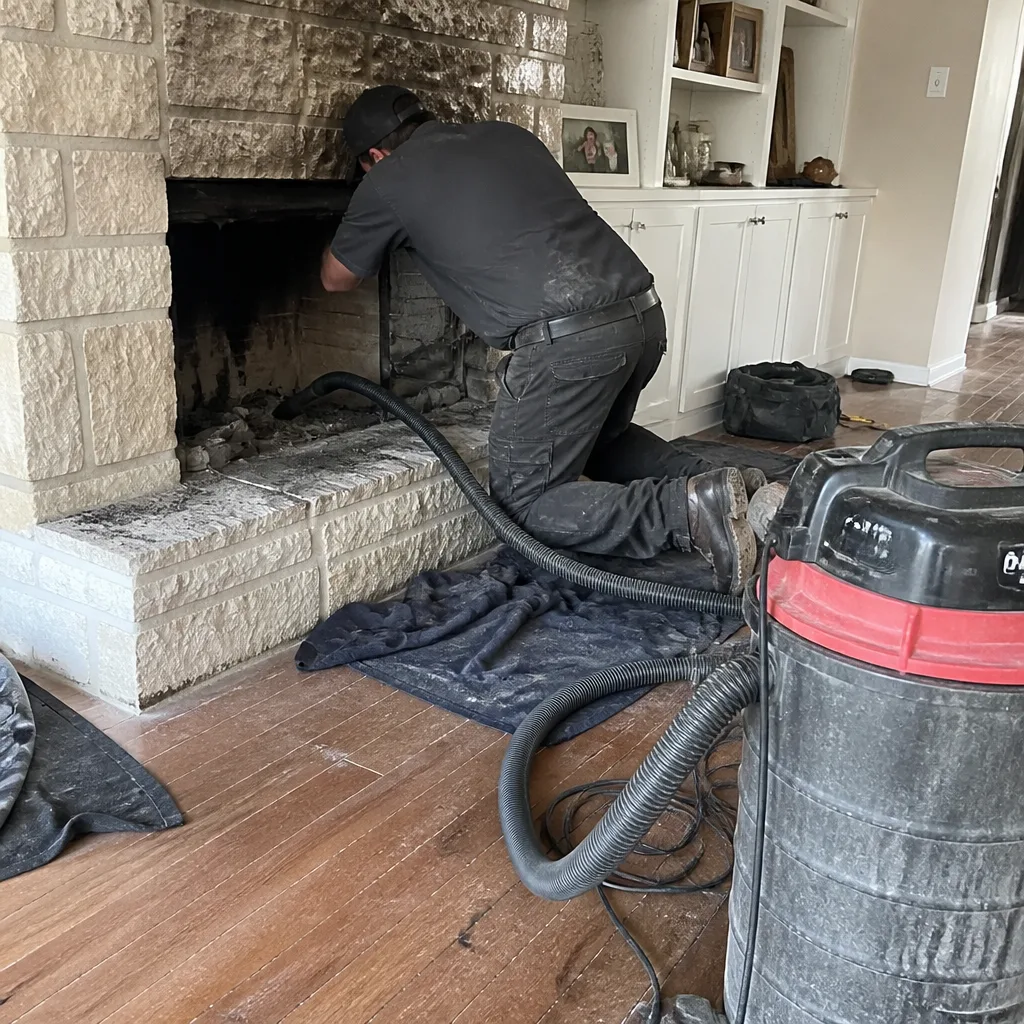 Before
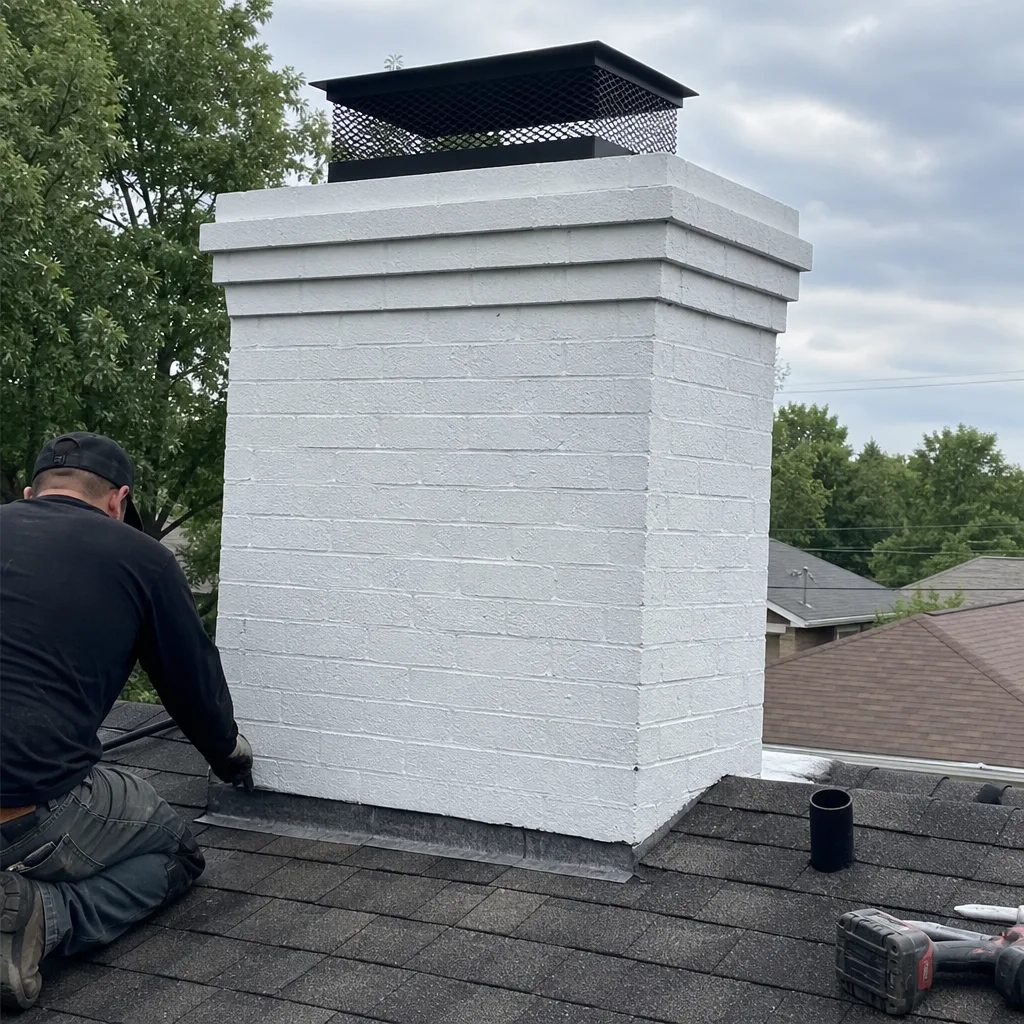 After
After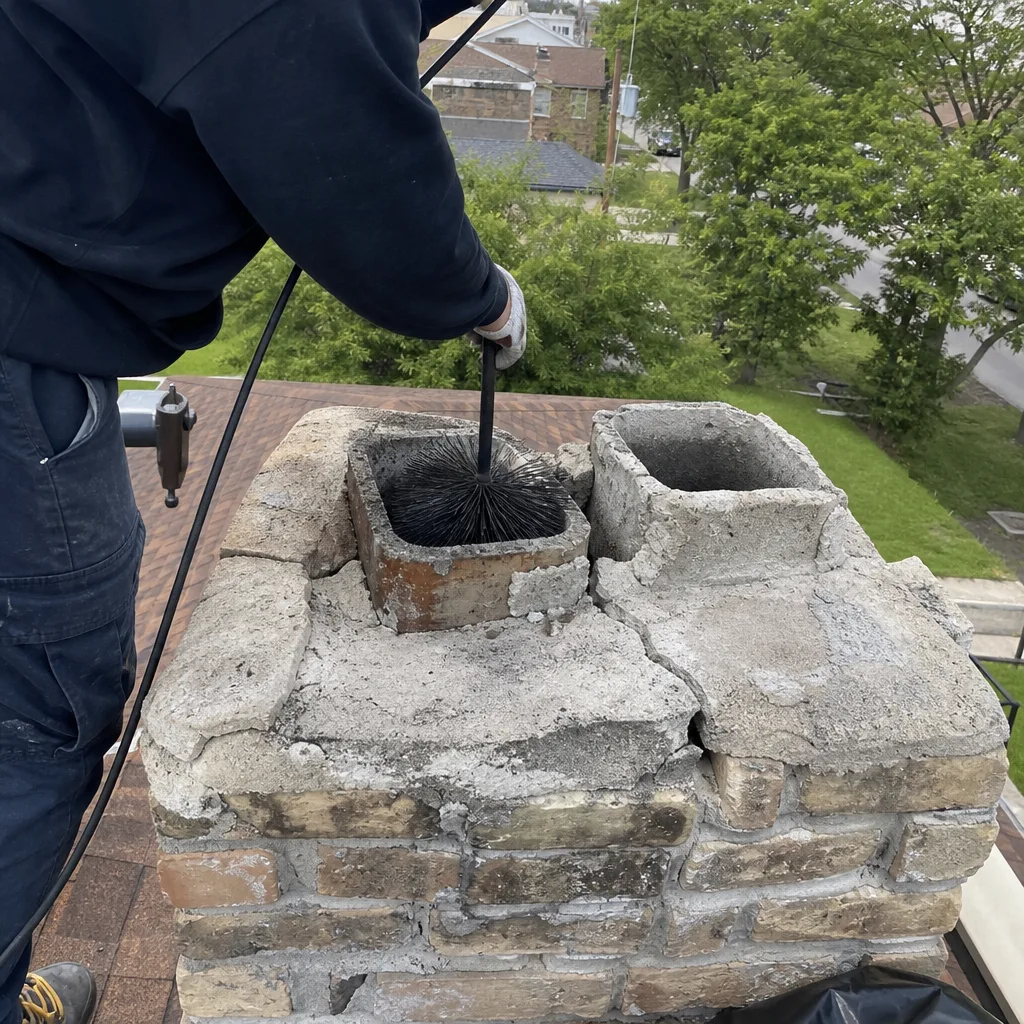 Before
 After
After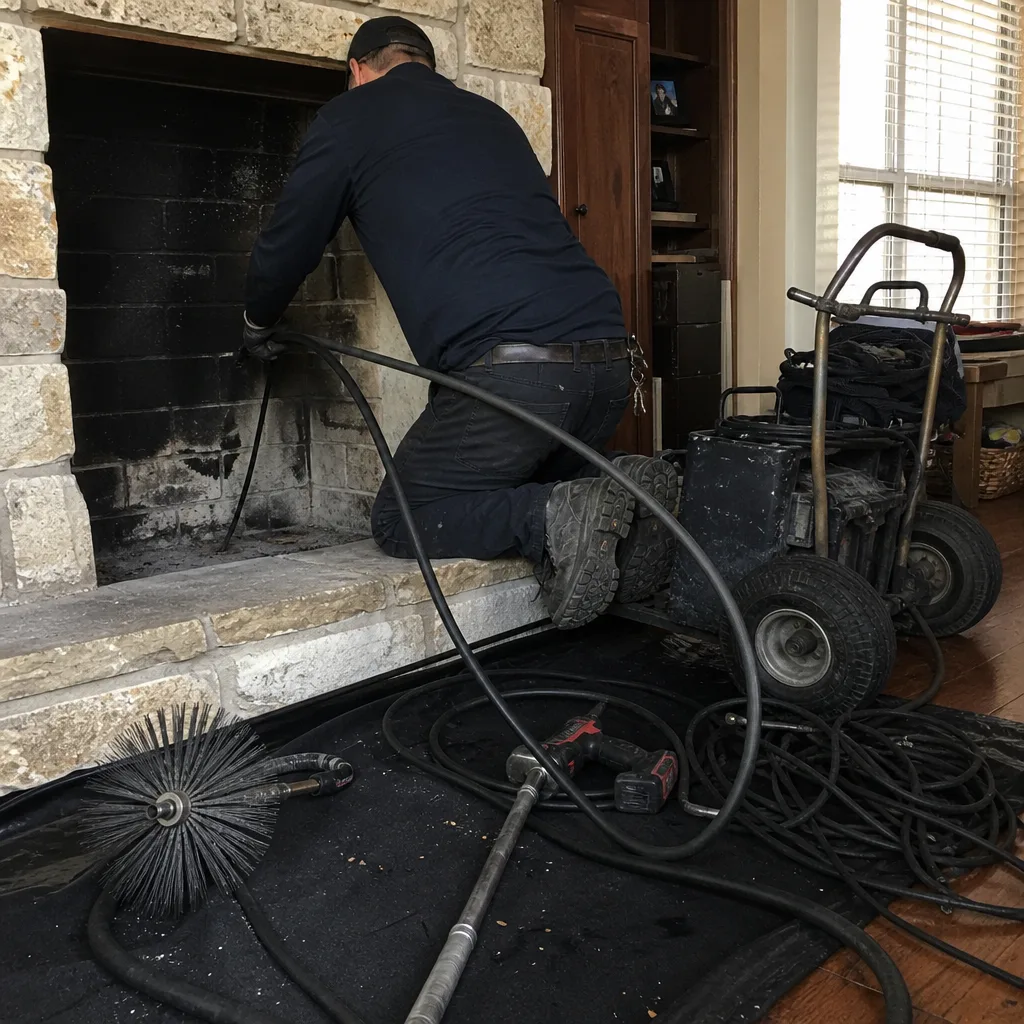 Before
 After
After