
Last updated October 15, 2026
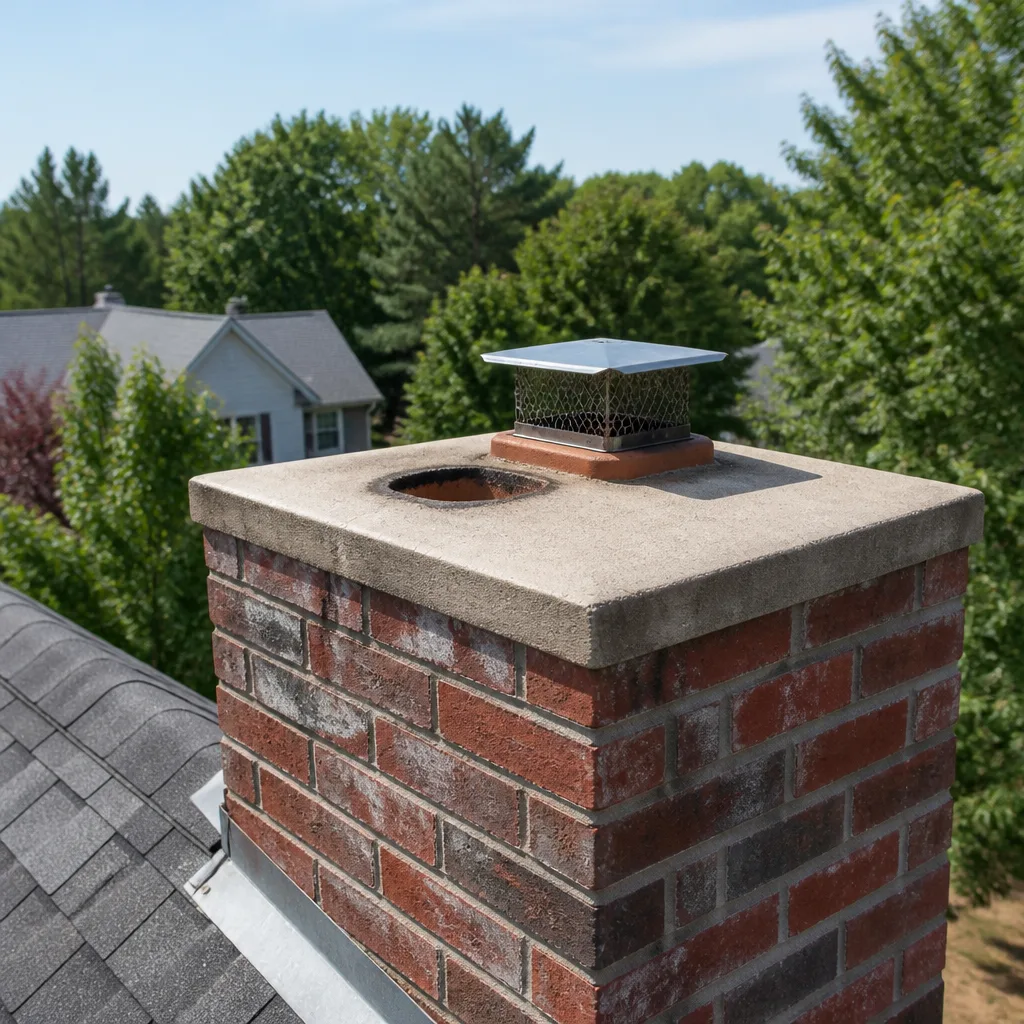 Sweep & inspection
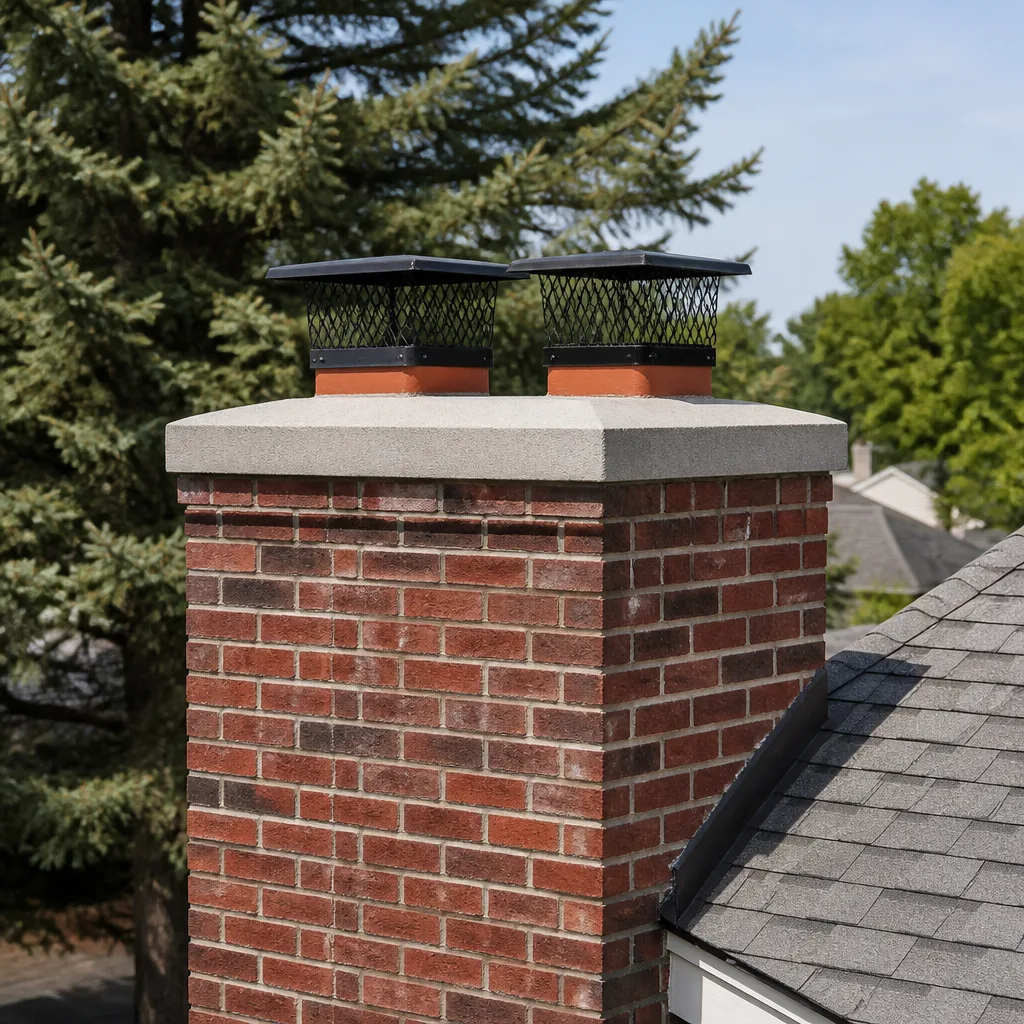 Caps & crowns
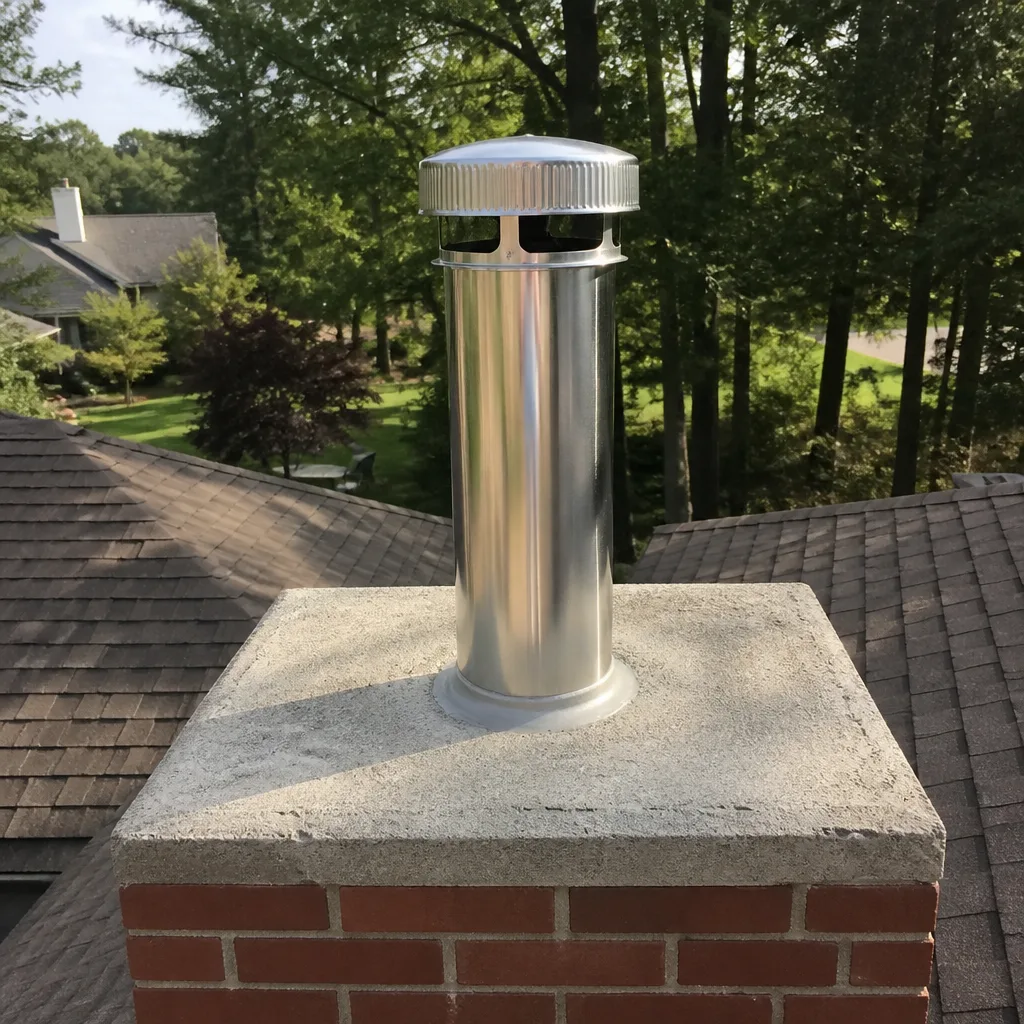 Flue relining
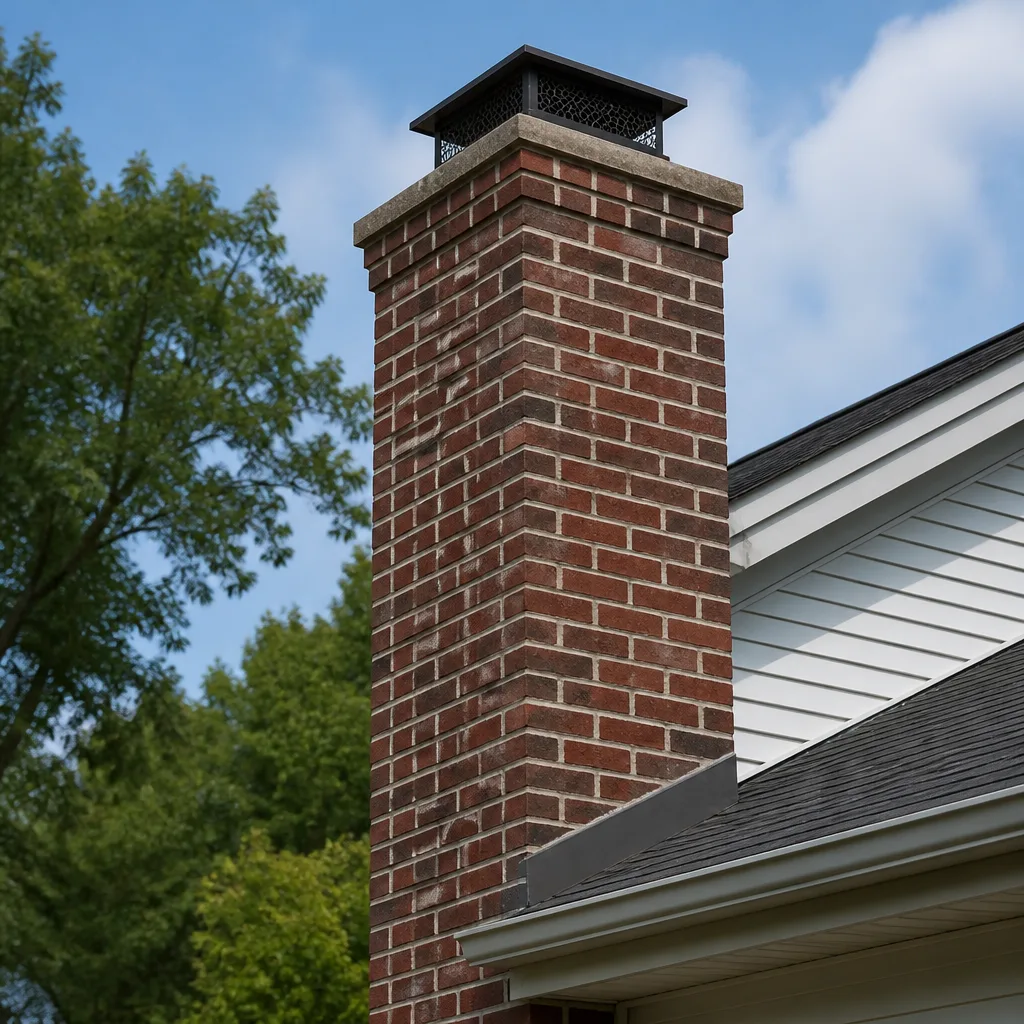 Masonry repair
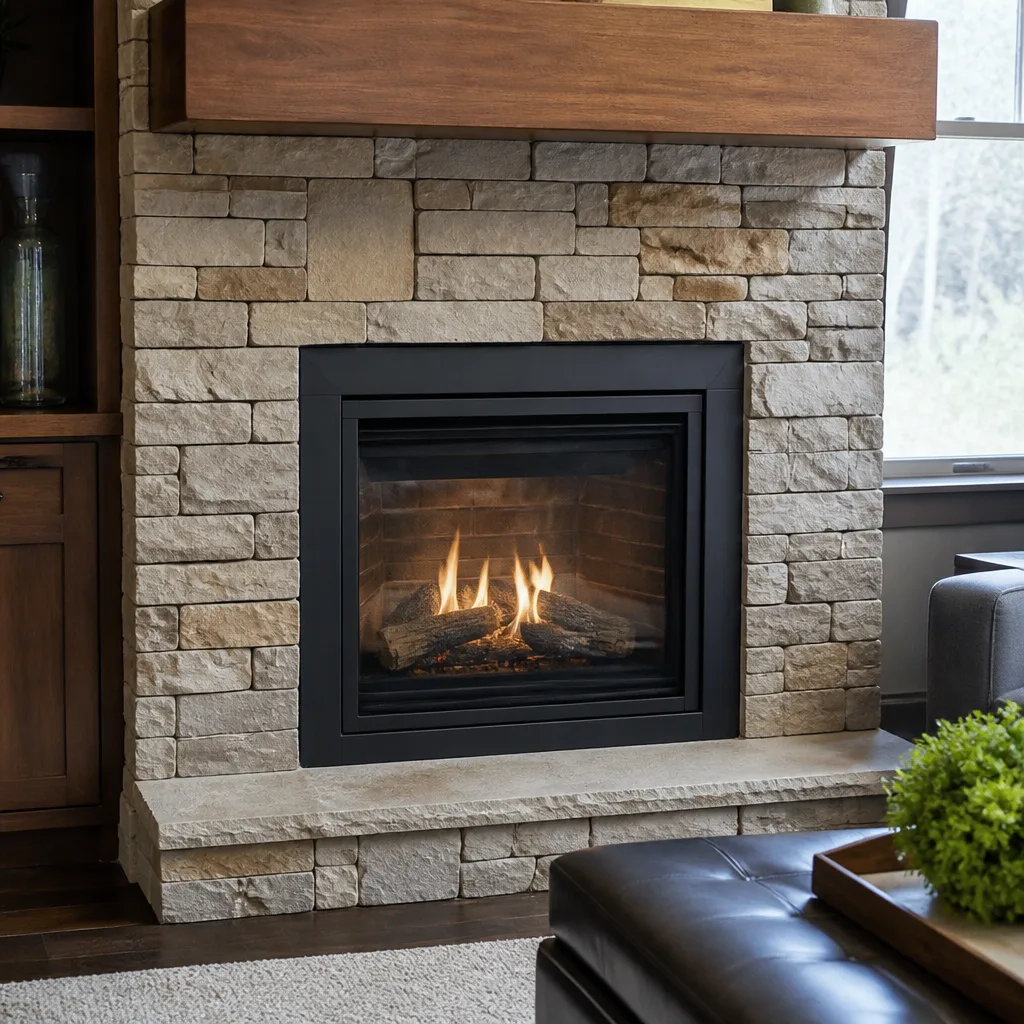 Gas fireplace service
Level 1 sweep and inspection to the NFPA 211 annual standard - flue, crown, cap, and flashing checked and photographed
Chimney sweep logs do not sweep chimneys. They loosen some creosote - which then falls where a brush and vacuum still have to collect it.
Chimney Cleaning Warning Signs: A Dallas Homeowner’s Reference Guide
Every chimney warning sign guide you’ll find online lists the same five symptoms: smoke in the room, dark staining, odd smells, animals in the flue, cracked masonry. What those guides never tell you is what each symptom actually costs to fix today versus what it costs if you wait twelve months, and which ones mean you should stop using the fireplace tonight. That gap between noticing a problem and knowing what to do about it is where Dallas homeowners lose thousands of dollars. This guide pairs every warning sign with a real dollar consequence, a Dallas-specific reason it happens here, and a decision rule you can apply before you pick up the phone.
Quick Answer
If you see white staining (efflorescence) on the exterior masonry, smell something like asphalt or barbecue inside the house on humid days, or notice dark, shiny, tar-like buildup on the damper or flue walls, your chimney needs attention within 30 days. If smoke enters the living space while the fire is burning, you hear falling debris inside the flue, or you see honeycomb-shaped residue that looks like puffed black popcorn, stop using the fireplace immediately and call a professional. Most cleaning-related warning signs cost between $200 and $450 to address now; the same symptoms left for a year in Dallas’s clay soil and thermal cycling routinely become $1,500 to $4,000 structural repairs. For a full breakdown of what’s involved, see our Complete Guide to Chimney Cleaning in Dallas.
Styles & brands we work with
Table of Contents
- The White Staining That Looks Cosmetic (And Isn’t)
- Fireplace Odors: What They Smell Like and What They Mean
- Smoke in the Room: The Decision Rule
- Creosote Buildup: The Chimney Fire Risk
- Dallas-Specific Cracking Patterns That National Guides Miss
- Post-Hailstorm Cap Damage: The Overlooked Insurance Claim
- How to Photograph and Describe a Warning Sign for an Accurate Phone Quote
- Cleaning Fixes the Symptom, Not the Structure: What to Ask
The White Staining That Looks Cosmetic (And Isn’t)
Take a walk around the outside of your house and look at the chimney. If you see white, chalky patches or streaks on the brick, that’s efflorescence, and it is not a cleaning problem. It’s water moving through your masonry, dissolving salts inside the brick and mortar, and depositing them on the surface as the water evaporates. In Dallas, the thermal cycling between hot days and cool nights happens more aggressively than in cities with milder climates, which is why our chimneys show efflorescence faster and why the damage behind it progresses faster too.
The decision rule for efflorescence is simple: if the staining is light and powdery and wipes off with a dry cloth, you’re looking at early-stage moisture intrusion. An Chimney Inspection in Dallas with a moisture meter reading will tell you whether the water is coming from a cracked crown, damaged flashing, or porous brick. If the staining is thick, crystalline, or shows up in vertical streaks that persist after rain, you’re into masonry repair territory.
Here’s what the Dallas market actually costs, based on what we see across the city:
- Address now: Cracked chimney crown repair or flashing reseal, $350 to $900. Inspection to identify the source, $150 to $300.
- Wait 12 months: Spalling brick faces, $1,800 to $4,500. Partial chimney rebuild, $3,000 to $8,000. The clay soil movement that runs under every Dallas foundation accelerates this once water gets behind the brick.
If you’re in an older neighborhood like Lakewood, East Dallas, or Oak Cliff, your chimney is likely fifty-plus years old and the mortar joints are the weak point. If you’re in a newer construction area like Frisco or Prosper, the issue is often a poorly poured crown from the original build. Either way, efflorescence is the chimney telling you the seal has failed. Listen to it before the freeze-thaw cycle of a Dallas January turns the cosmetic stain into a structural problem.
Fireplace Odors: What They Smell Like and What They Mean
A fireplace smell is not one smell. It’s several, and each one points to a different problem. Learning to tell them apart is the cheapest diagnostic tool you own.
Asphalt or barbecue smell on humid days. This is creosote absorbing moisture from the air and off-gassing into the living space. It’s the most common odor complaint in Dallas from April through October, when outdoor humidity pushes 70 to 90 percent. The fix is usually a standard chimney sweep, which in our market runs $200 to $350, plus a visual check of the flue liner while we’re up there. If you’re weighing whether to do this yourself, our DIY vs Professional Chimney Cleaning guide covers the Dallas-specific factors to consider.
Wood rot or damp earth smell, especially after rain. This points to water getting into the flue. The most common source in Dallas is a cracked chimney cap or deteriorated crown, followed by flashing pull-away where the chimney meets the roofline. Water in the flue mixes with the creosote on the walls and creates a smell that’s closer to a wet basement than a campfire.
Sulfur or rotten egg smell when the fireplace is lit. Stop using the fireplace and don’t light it again until a professional has looked at it. That odor can indicate combustion gases drafting back into the home, which is a carbon monoxide concern. The National Fire Protection Association specifically flags venting failures as a life-safety issue, and this is the one smell where “schedule within 30 days” becomes “stop using it tonight.”
Mold or mildew smell that you notice near the baseboards, not the fireplace itself. That’s possibly water tracking down the chimney chase and into the wall cavity. This one often presents as a smell without any visible sign, and it’s worth a professional inspection because the cost of finding it now, roughly $150 to $300 for a diagnostic visit, is a rounding error compared to opening up a wall for mold remediation.
The one smell most Chimney Sweep in Dallas guides skip is the “old pizza box” odor of an animal nest. If a squirrel, bird, or raccoon has nested in the flue, you’ll sometimes smell stale food and droppings before you hear anything. That material is combustible and must be removed, along with the animal if it’s still present.
Smoke in the Room: The Decision Rule
Let’s be direct: a properly functioning chimney does not push smoke into your living room. Occasional wispy smoke during the first two minutes of lighting on a cold night can be a draft issue that corrects itself. Anything beyond that is a symptom with an identifiable cause and a specific decision rule attached.
- If smoke comes back only when the fire is first lit: Prime the flue. Hold a lit rolled-up newspaper up near the open damper for about thirty seconds to warm the air column. If smoke still pushes in after that, the problem is not priming. It’s draft.
- If smoke comes back only when the fire is burning low: The flue is not tall enough or not drawing strongly enough to pull smoke up once the fire cools. This is sometimes a cap that’s the wrong size, often a flue that’s too short relative to the roofline, and occasionally a chimney that was never built to code for its location.
- If smoke comes back whenever the fire is active, regardless of intensity: You have a mechanical obstruction or a severe creosote restriction. This is not a “schedule a cleaning” situation. This is a “stop using the fireplace until a professional has looked inside the flue” situation.
- If you smell smoke in the house hours after the fire is out: That’s almost always chimney odor (creosote off-gassing), not drafting. The distinction matters because one calls for a sweep and the other calls for a structural assessment.
Dallas houses have a specific drafting issue that cooler cities don’t: our fireplaces are often installed as decorative fixtures in homes where the chimney is boxed in the middle of the house rather than running up an exterior wall. That interior chase stays warm, which sounds good, but it means the flue doesn’t generate the same temperature differential that an exterior chimney in a cold climate does. The result is weaker natural draft, which is why so many Dallas fireplaces need a sweep and cap adjustment to work properly.
Creosote Buildup: The Chimney Fire Risk
Creosote is the tar-like residue that condenses inside a flue when wood smoke cools before it exits the chimney. It comes in three stages: a flaky gray or brown dust, a porous black crust with a honeycomb texture, and a hardened, glazed coating that looks like poured tar. That third stage is the one that catches fire. It’s also the one that a standard brush sweep cannot remove without chemical treatment or mechanical abrasion.
Chimney fires in Dallas happen more often than insurance statistics suggest, because most mild chimney fires self-extinguish and homeowners never report them. The typical scenario is a homeowner burns a fire, hears a rumble or roar from the chimney, notices flaking at the flue tile, and dismisses it. Inside the flue, the glazed creosote has already done its damage: thermal shock cracks the flue liner, and the next fire you build is venting through those cracks into the chimney chase, not up the flue.
The decision rule here is straightforward: if you can see black, shiny, or honeycomb accumulation on the damper plate, on the flue wall, or on the interior of the firebox, you need a sweep before the next burn. Our Chimney Sweep Maintenance Checklist for Dallas Homeowners walks through exactly what to look for each season. The cost of a standard sweep in the Dallas area runs $200 to $350. The cost of a damaged flue liner replacement with a professional system like DuraFlex or Copperfield runs $2,500 to $6,000 installed. You can do the math on that one.
If you burn fires more than twice a week during the winter, the CSIA and NFPA recommendation is an annual sweep. If you burn pine or other softwood, and many Dallas homeowners do because it’s what the big-box stores stock, creosote builds faster because pine burns sappy and cooler than hardwoods like oak or hickory. Adjust your expectation accordingly: heavy pine burners often need two sweeps per season.
Dallas-Specific Cracking Patterns That National Guides Miss
National chimney guides talk about cracked brick and crumbling mortar in generic terms. They never mention that Dallas has a specific cracking pattern driven by our expansive clay soil, and that recognizing the pattern tells you whether you’re dealing with a chimney problem or a foundation problem.
Diagonal stair-step cracks that follow the mortar joints. This is the signature of foundation-shift stress. As Dallas clay soil expands during our wet springs and contracts during the August dry spells, it pulls on the chimney’s footing. The chimney flexes, and the mortar joints open in a diagonal stair-step pattern. The fix often starts with a structural assessment of the foundation, not with repointing the brick. If you just patch the mortar without addressing the movement, the cracks return within two years. This is the pattern we see across neighborhoods built on deep clay like Mesquite, Garland, and the southeastern half of Dallas proper.
Horizontal hairline cracks along the mortar bed, with no diagonal pattern. That’s mortar erosion, not structural movement. Our summer UV exposure cooks the mortar joints, and over thirty to forty years the surface of the mortar sheds its binder. The fix is repointing, which in Dallas runs $15 to $30 per square foot of chimney face. That’s a maintenance expense, not a repair emergency.
Vertical cracks along the brick face that line up with the corners of the flue tile. That’s the chimney having lived through multiple thermal cycles without a properly sized liner or with a liner that’s been damaged. It’s the slow-motion version of a chimney fire. The fix requires assessing the flue with a camera and often a liner repair or replacement.
The mistake we see most often is homeowners patching these cracks with a tube of masonry caulk from the hardware store and calling it fixed. The crack is the symptom. The question is what is pushing or pulling against the chimney, and that question is specific to the Alcott Chimney Dallas home owner’s foundation type, chimney age, and construction era. You can’t answer it from a YouTube video.
Post-Hailstorm Cap Damage: The Overlooked Insurance Claim
Dallas gets hail. We get it in spring, we get it in early summer, and we occasionally get it in October when a late-season storm rolls through. And every year, thousands of Dallas homeowners file insurance claims for roof damage after a hailstorm without ever checking the chimney cap, the crown, or the flashing that ties the chimney to the roof deck.
Here’s the sequence: a hailstorm hits your house. The adjuster inspects the roof and approves replacement. The roofers strip and reroof, and in the process they detach the chimney flashing and either reuse it or replace it with a generic product. Six months later you notice a water stain on the ceiling near the fireplace or a smell from the firebox, and nobody can tell you whether it was the hail, the roofer, or pre-existing wear.
The insurance piece most Dallas homeowners miss is that chimney cap and crown damage from hail is often covered under the same claim as the roof. The window to file a supplemental claim in Texas is typically one year from the date of loss, but insurance companies move faster on supplements filed within the first ninety days. If your neighborhood just had a hail event and you haven’t had the chimney checked as part of the same claim, now is the time.
A hail-dented chimney cap rarely leaks immediately. What happens is the dent weakens the cap’s connection to the flue, then the next windstorm lifts it, and then the first real rain pours straight down into the flue. By the time you see the water stain, the cap has been gone for weeks and the flue has absorbed enough water to start breaking down whatever creosote or liner material is inside it.
How to Photograph and Describe a Warning Sign for an Accurate Phone Quote
Every contractor you call will tell you they “need to see it” before they can give you a number. That’s fair. What’s not fair is getting hit with a vague “we’d have to look at it” after you’ve already described the problem clearly. The way to get a useful phone quote is to describe the warning sign the same way a chimney professional thinks about it. Here’s a photographer’s script:
- Shoot the whole chimney from two angles. One from ground level standing back far enough to capture the full height from cap to roofline. One closer shot that shows the upper third where the crown, cap, and top three brick courses meet. This tells us the chimney’s height, its relationship to the roofline, and whether the cap or crown is visibly damaged.
- Shoot the warning sign itself at a middle distance. Show the full context around the crack, stain, or damaged area, not just a macro closeup. A closeup of a crack tells us nothing; a photo of the crack with the roofline and the top of the chimney in frame tells us where the stress is concentrated.
- Shoot the same sign with a coin or a key for scale. A quarter works. Lay it beside the crack, the efflorescence, or the damaged mortar joint. This solves the “how big is it” question that derails most phone quotes.
- If you’re photographing an interior sign, capture the damper plate, the firebox walls, and the flue opening. Use your phone’s flash. Don’t just shoot the smoke stain on the wall.
When you describe what you see, use the terms from this guide and add the facts that actually matter to a chimney professional: the age of the house, whether the chimney is interior or exterior, when the last sweep was, what kind of wood you burn, and whether you’ve had any recent roof work. That plus the photos is enough for an honest contractor to give you a realistic range. If a company still won’t give you any range after that, call a different company.
Cleaning Fixes the Symptom, Not the Structure: What to Ask
There’s a moment in every chimney assessment where the technician tells you whether the problem can be solved with a sweep or whether the sweep is just step one of a bigger conversation. Knowing how to tell the difference before you sign anything is where Dallas homeowners avoid the biggest overcharges and the biggest oversights.
A chromatic sweep is one where the technician removes creosote and debris, inspects the flue with a camera, and hands you a written report that includes photos. This is the standard of care. The sweep solves the symptom, the camera inspection identifies or rules out the structural issue, and you know what you’re dealing with because you can see it.
A masked sweep is one where the technician removes creosote, doesn’t camera the flue, and doesn’t tell you about the cracked flue tile or the deteriorated mortar joint behind the damper because “we don’t look at that.” You pay $250, the air is fresher, and the structural problem keeps progressing behind the cleaned surface.
When you call to book a sweep, ask these four questions in order:
- “Does the sweep include a camera inspection of the flue liner?” If the answer is no, that’s a red flag. The standard of care in 2026 is camera verification, period.
- “Do I get photos of what you find, or just a verbal summary?” You need the photos. A verbal summary is not evidence.
- “If you find structural damage, do you show me the photo before you recommend repair?” If the answer is anything other than yes, call someone else. You should never be told you need liner or masonry work without seeing the evidence.
- “Is the quote for the sweep separate from the quote for any repairs, or are they bundled?” They should be separate. Always.
The honest version of this conversation sounds like this: “Your flue is clean and the liner is intact. You don’t need any masonry work this year. Here’s what to watch for.” Sometimes that’s the entire conversation, and a good technician is happy to have it. At Alcott, we use HeatShield and Gelco materials when we do recommend liner or masonry repair, because they’re the professional-grade systems that hold up to Dallas’s thermal cycling better than the box-store patches. But the principle is bigger than any brand: no repair is ever recommended without camera evidence the homeowner sees first.
Common Mistakes to Avoid
- Ignoring efflorescence because it “wipes off.” Efflorescence is water movement made visible. Wiping it off is like turning off the check-engine light instead of fixing the engine. It will return, and the moisture will keep working behind the brick.
- Burning pine and softwoods consistently without sweeping more often. Pine burns cooler and sapier than hardwoods, which means more creosote condensation. If you’re burning pine twice a week through a Dallas winter, you need a sweep more often than your oak-burning neighbor.
- Patching cracks without identifying the cause. Dallas foundation shifts crack chimneys in a specific diagonal pattern. If that’s what you have, the crack is a symptom of ground movement, and any patch job is temporary by definition.
- Filing a hail claim for the roof and never checking the chimney. Your cap, crown, and flashing are part of the same roof assembly. If hail damaged the roof, it likely damaged the chimney components too, and the supplemental claim window closes fast.
- Accepting a sweep without a camera inspection. A brush clean without a flue camera is half a service. You’re paying for the symptom fix and skipping the diagnostic that catches the structural issue before it becomes a $3,000 repair.
- Reading “smoke in the room” as a fireplace problem when it’s actually a draft problem. Interior chases in Dallas don’t draft the way exterior chimneys do. A cap adjustment or flue extension might be the real fix, and that’s a different conversation than “I need a cleaning.”
See the difference
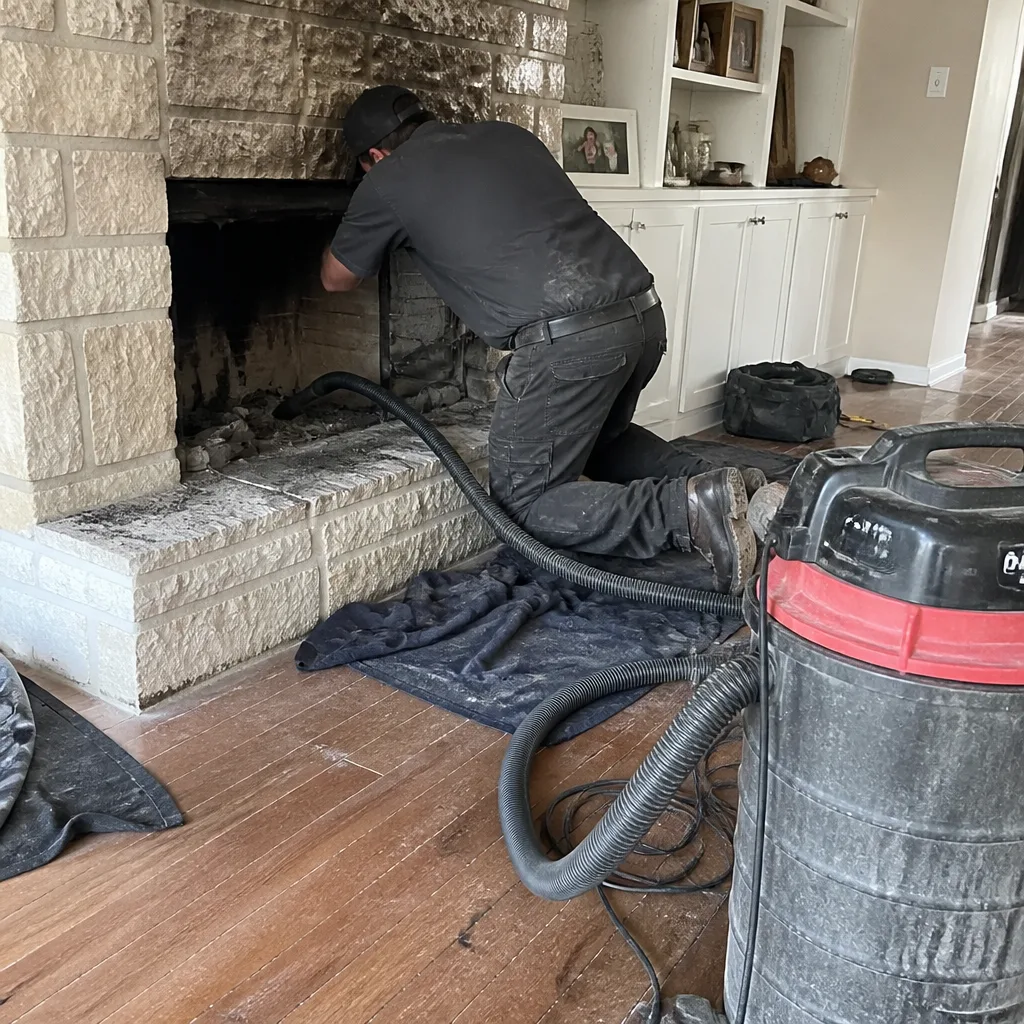 Before
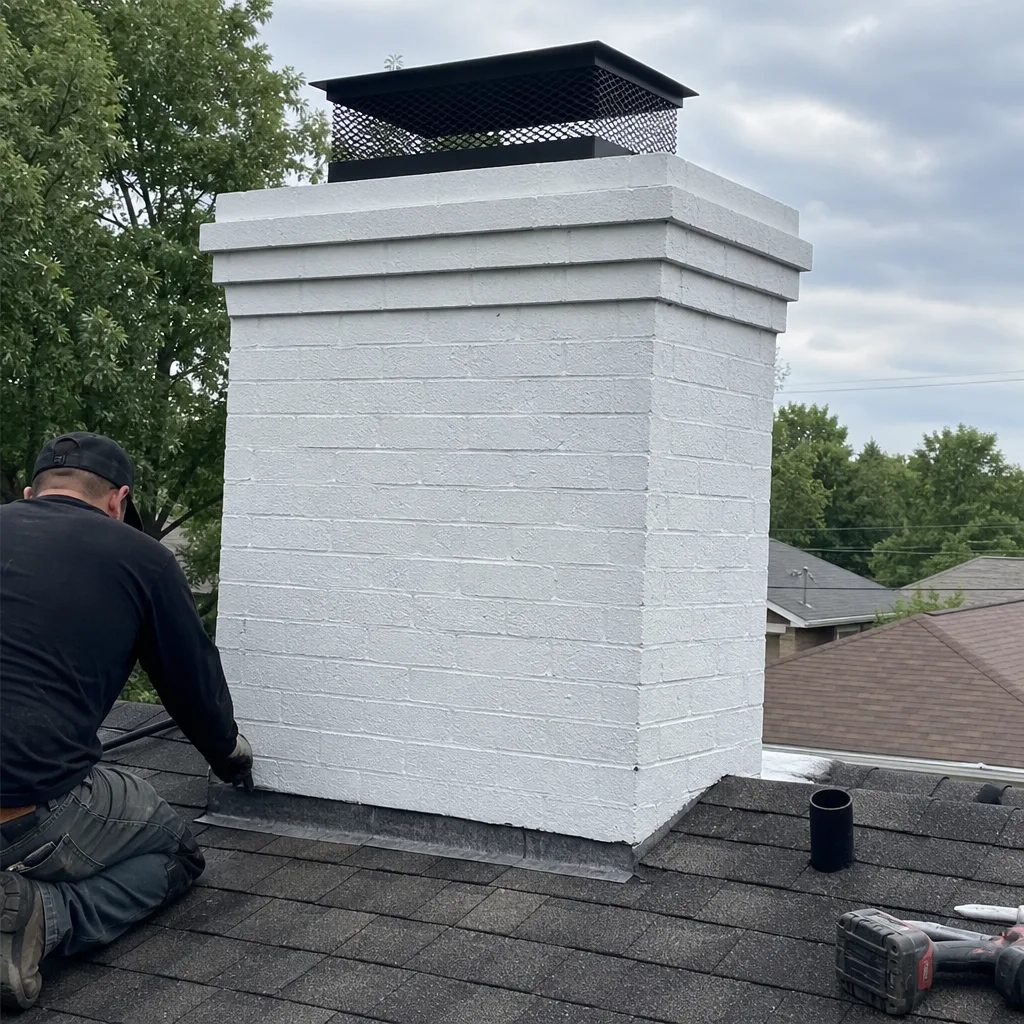 After
After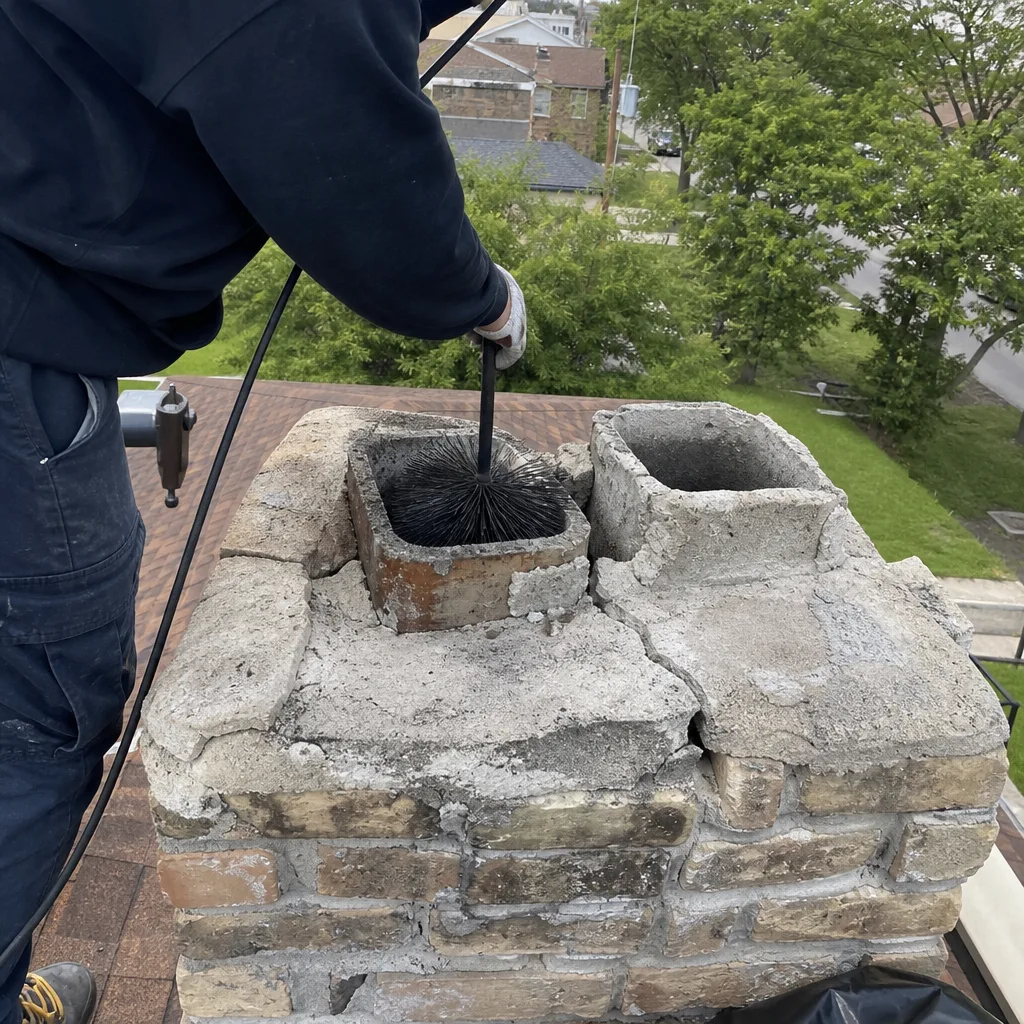 Before
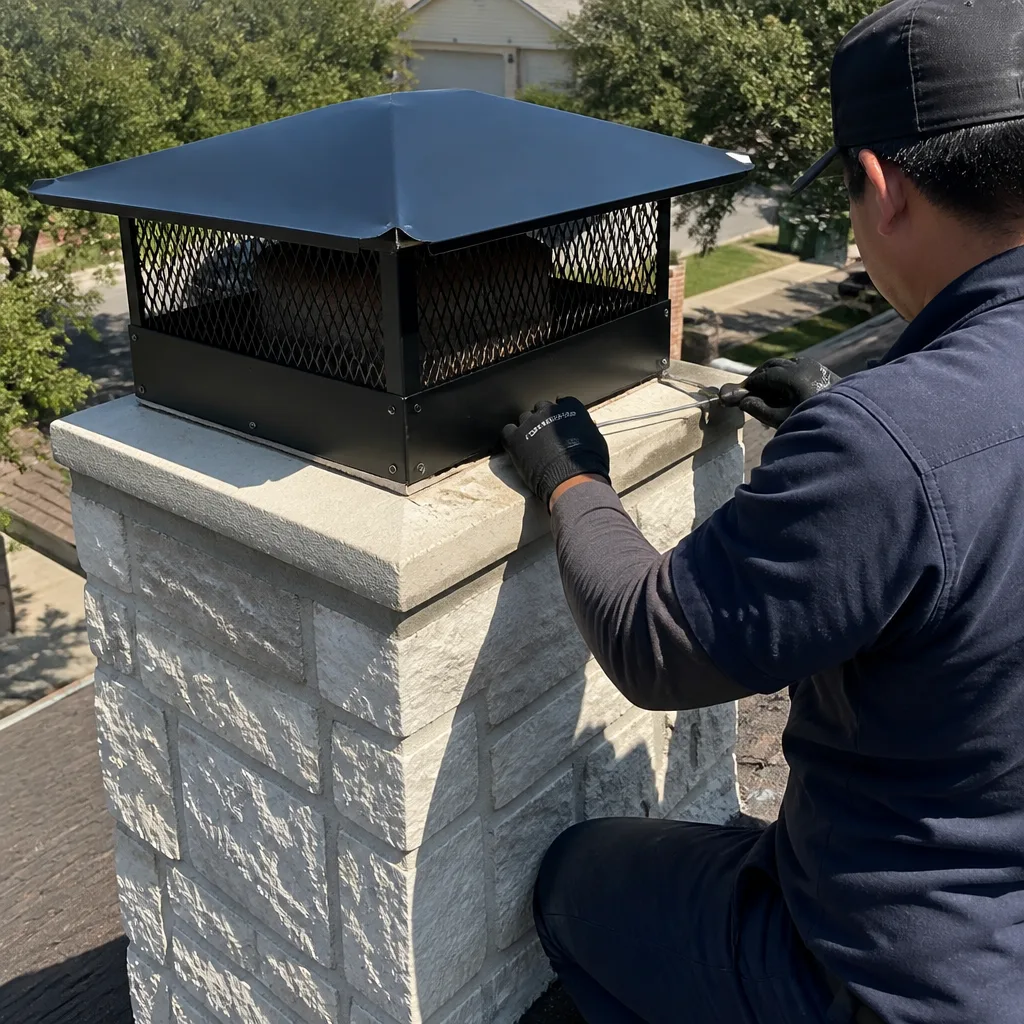 After
After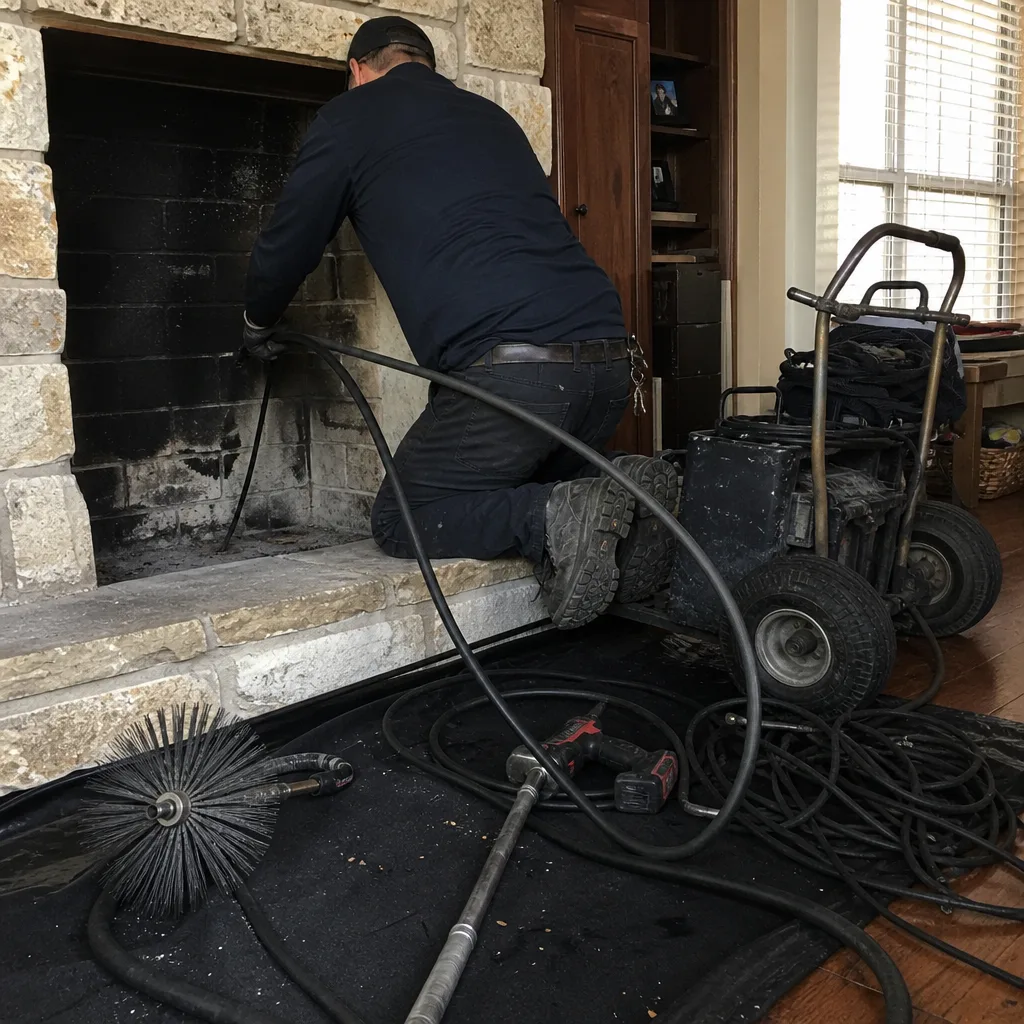 Before
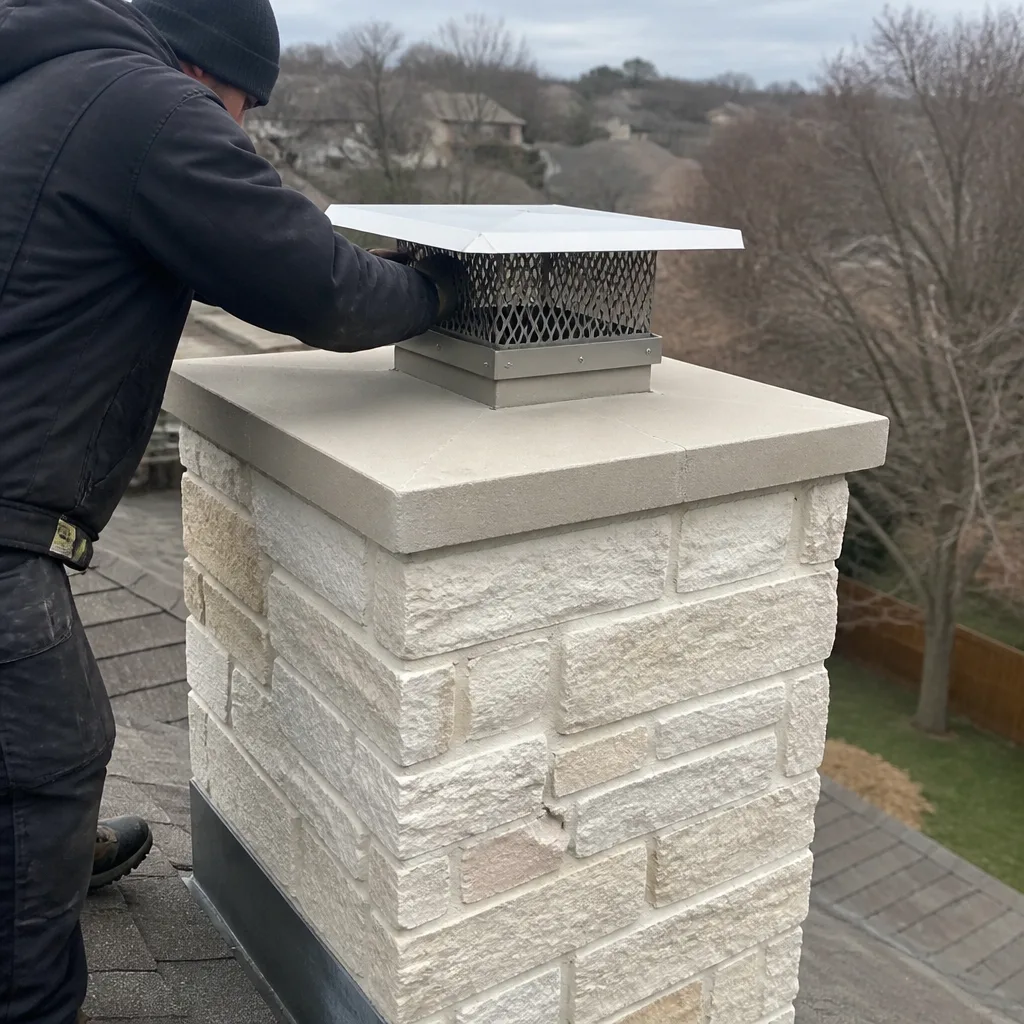 After
AfterWhen to Call a Professional
Call a professional if smoke enters the living space with the fire active, if you see shiny or honeycomb creosote on the damper or flue walls, if you smell sulfur or rotting eggs while burning, if efflorescence is spreading or showing in vertical streaks, if a hailstorm has passed through your neighborhood and you haven’t had the cap checked, or if you haven’t had a camera inspection in three or more years. All of these are specific, actionable thresholds. None of them are “wait and see” situations. Alcott Chimney Dallas offers free estimates in Dallas – call (361) 264-4483 and talk it through with a real person. We’ll tell you what we think over the phone and send a written quote before any work starts.
Frequently Asked Questions
A standard chimney sweep in Dallas typically runs $200 to $350, which includes the brush clean, a visual inspection, and ideally a camera inspection of the flue liner. If the sweep is bundled with a full Level 2 inspection and written photo report, expect the combined price to run $350 to $550. Call (361) 264-4483 for an exact quote – estimates are free.
Annual sweeping is the baseline if you burn at all, even occasionally; twice-seasonal sweeping makes sense if you burn pine twice a week or more or if you have a history of heavy creosote. Dallas humidity accelerates creosote degradation in summer, which makes annual maintenance more important than in dry-climate cities.
Sometimes yes, sometimes the crack can be resurfaced with a product like HeatShield for less than a full replacement. The determining factors are the crack’s location, depth, and whether the flue tile is still structurally intact. You should never be asked to make that decision without seeing the camera footage; any company that asks you to trust them blindly has failed the test.
Skipping the cleaning allows creosote to build past the point where a standard brush can remove it, and once glazed creosote forms, the risk of a chimney fire rises every time you burn. A chimney fire that cracks your flue liner turns a $250 cleaning into a $2,500 to $6,000 liner repair. The math is not complicated; Dallas homeowners who skip two or three sweeps routinely see four-figure repair bills that a $300 visit would have prevented.
Efflorescence is a sign of water moving through masonry, not necessarily foundation movement. But in Dallas, where expansive clay soil shifts under many homes, water intrusion behind the brick can compound pre-existing foundation stress. The way to tell the difference is a visual assessment: diagonal stair-step cracks suggest movement, while efflorescence without cracking suggests a crown or flashing leak. Call (361) 264-4483 and describe what you’re seeing – we’ll give you a straight answer.
Yes. Most warning signs are visible from the ground or from inside the firebox: efflorescence on the exterior brick, cracks you can see from the yard with binoculars, smoke in the room while burning, and creosote visible on the damper plate. You don’t need to climb onto the roof to photograph these, and you shouldn’t – steep roof work and chimney access are dangerous enough that trained professionals with proper climbing equipment should handle rooftop diagnostics.
The Bottom Line
Dallas chimneys fail in predictable ways: water gets past a cracked crown or cap, creosote builds past the point of easy removal, and the expansive clay soil under the house pulls at the chimney until the mortar joints open. Every one of these failures announces itself with a warning sign long before it becomes a four-figure repair. White staining means water. Dark shiny buildup means fire risk. Smoke in the room means a draft or obstruction failure. The difference between a Dallas homeowner who spends $300 on a sweep and one who spends $3,000 on a rebuild is not knowledge – it’s the willingness to act on what the chimney is already telling you. See the sign. Call early. Get the camera evidence. Make an informed decision.
Written by Ruben Castellano, Owner at Alcott Chimney Dallas, serving Dallas since 2002.