
Last updated October 15, 2026
 Sweep & inspection
 Caps & crowns
 Flue relining
 Masonry repair
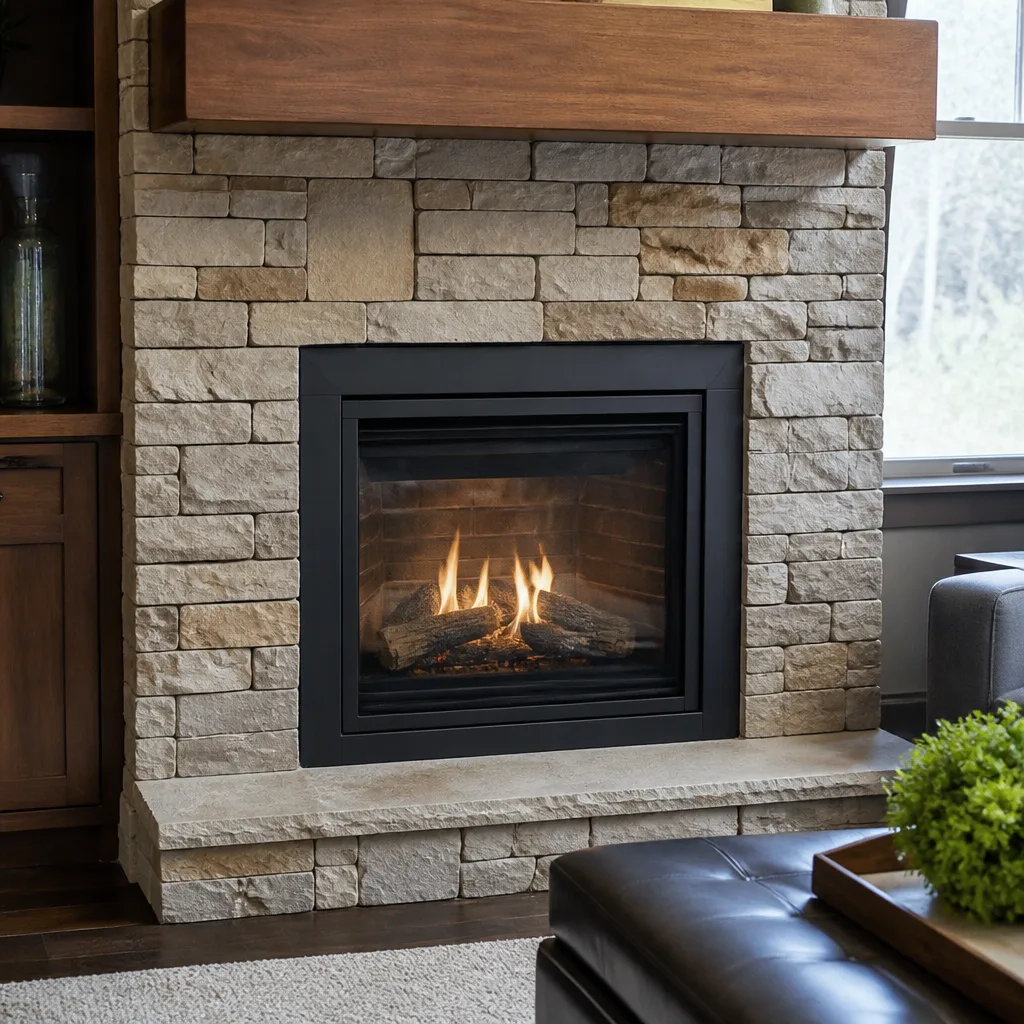 Gas fireplace service
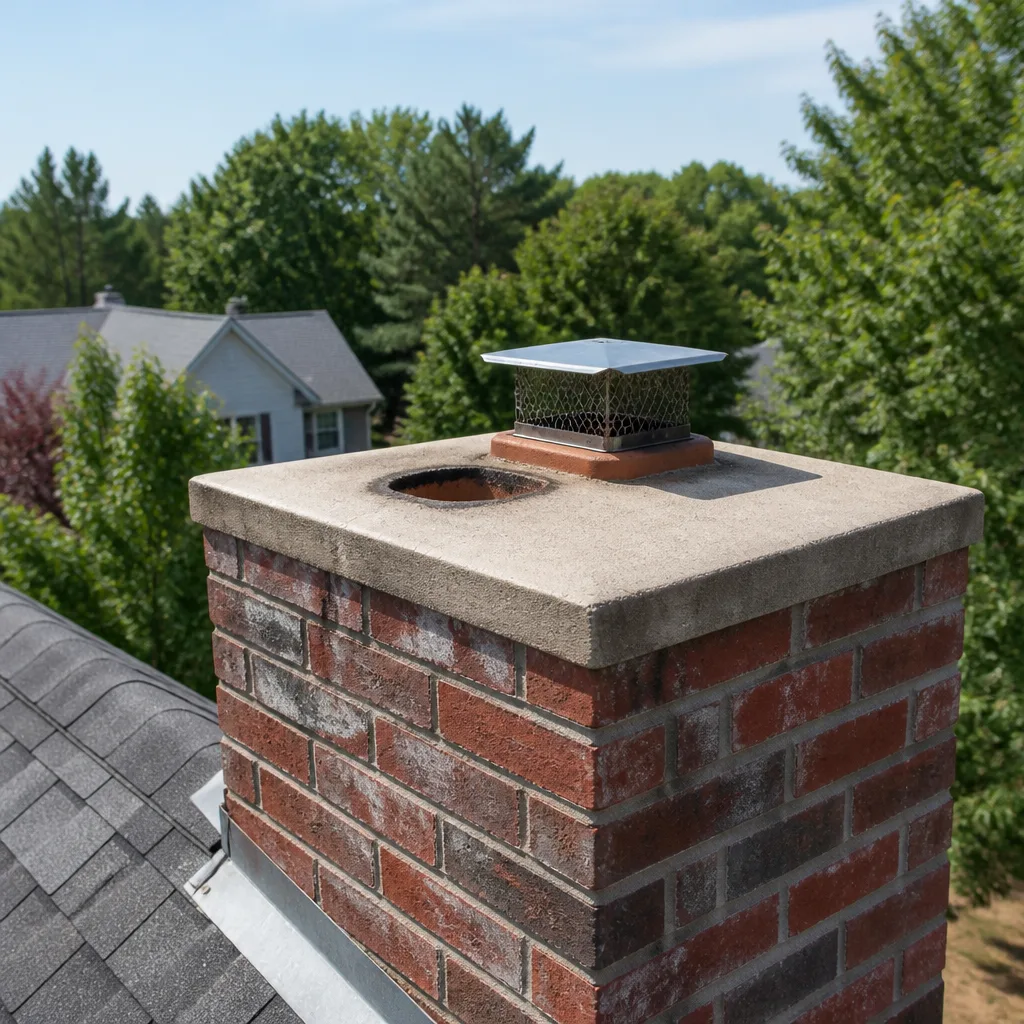
Level 1 sweep and inspection to the NFPA 211 annual standard - flue, crown, cap, and flashing checked and photographed
Chimney sweep logs do not sweep chimneys. They loosen some creosote - which then falls where a brush and vacuum still have to collect it.
The Complete Guide to Chimney Cleaning in Dallas
Dallas homeowners average fewer than 40 burning days a year, yet creosote still reaches dangerous Stage 2 buildup in a single season. Why? Because it’s not just how often you burn. It’s what you burn, how cool your flue runs during those rare cold snaps, and the specific way North Texas clay soil and summer heat work on your chimney’s structure. This guide covers what a Dallas chimney actually needs, what it should cost, what happens during a proper cleaning, and how to avoid getting sold repairs you don’t need. For more, see our more guides & resources. We’ve been cleaning chimneys in Dallas since 2002, and we’ll walk you through everything we’ve learned.
Styles & brands we work with
Quick Answer
Chimney cleaning in Dallas typically costs between $189 and $349 for a standard sweep, depending on chimney height, accessibility, and how much creosote has built up. Most Dallas homes should have their chimney cleaned every 50 to 70 burns, which for most households means every 1 to 2 years. A professional sweep takes about 45 to 90 minutes and should include a full inspection of the flue liner, crown, and damper, with a written report and photos of anything the technician finds.
Table of Contents
- What Dallas Chimney Cleaning Actually Involves
- How Often Should You Clean Your Chimney in Dallas?
- What Chimney Cleaning Costs in Dallas
- Why Dallas Chimneys Build Up Creosote Differently
- How Dallas Clay Soil Affects Your Chimney
- What a Dallas-Specific Inspection Should Check
- Exactly What to Expect: From Booking to Final Report
- How Our 365-Day Done Right Promise Works in Plain Terms
- Common Mistakes to Avoid
- When to Call a Professional
- Frequently Asked Questions
- The Bottom Line
What Dallas Chimney Cleaning Actually Involves
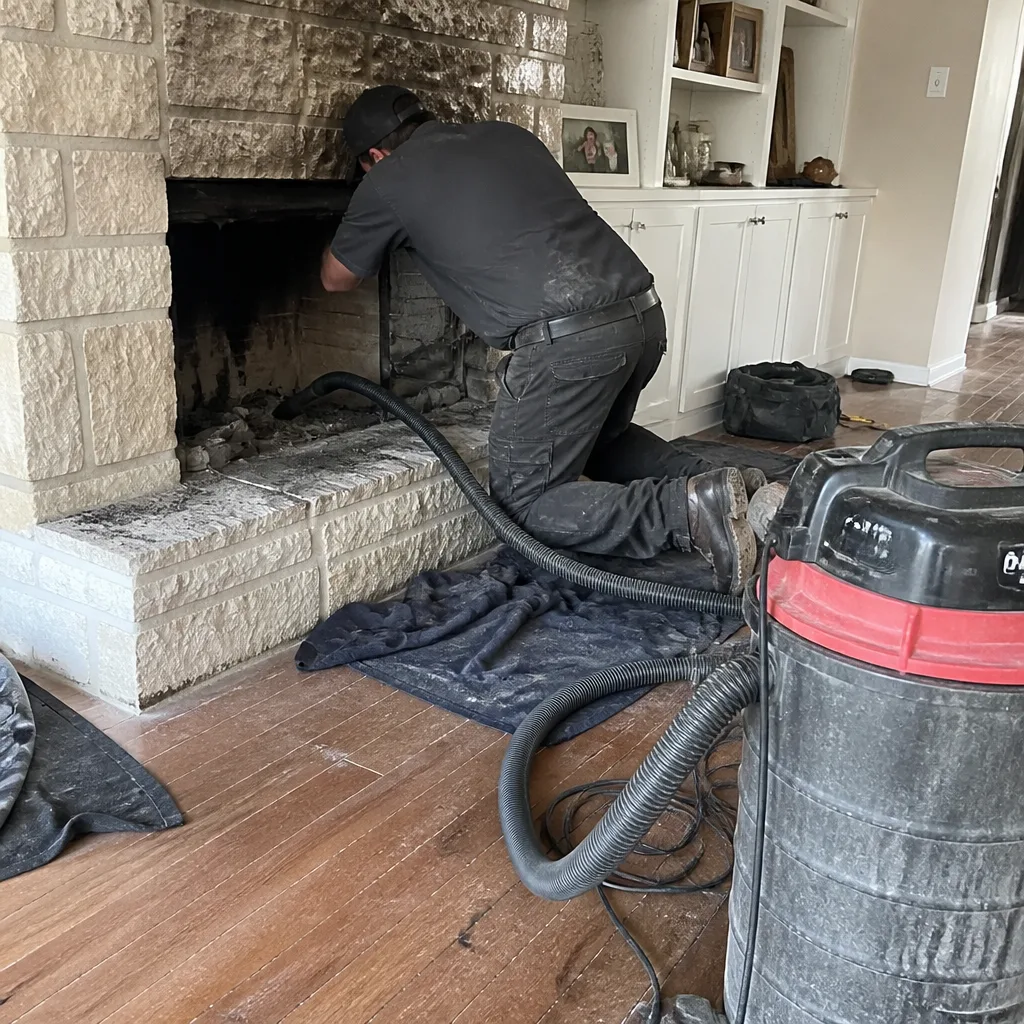
A real chimney cleaning is not a quick poke with a brush. When we sweep a chimney in Dallas, we’re removing creosote (the tar-like, flammable residue that builds up inside your flue from wood smoke), soot, and any debris that’s dropped in from the top, like leaves, bird nests, or even dead animals. The process involves covering the fireplace opening with a sealed barrier to keep dust inside the chimney, then running professional rotary brushes or rods from either the top down or the firebox up, depending on access.
Here’s the step-by-step of a standard sweep at a Dallas home, using the same process we’ve refined since 2002:
- Protection first. We lay drop cloths around the hearth and seal the fireplace opening so no dust enters your living space.
- Mechanical sweep. We run rotary wire brushes or poly rods through the entire flue length to break up and remove creosote and soot from the liner walls.
- Flue inspection. While the flue is clean, we inspect the liner for cracks, gaps, or deterioration. This is when we look for the condition of any terra cotta liner or stainless system.
- Smoke chamber and damper check. We clean the smoke chamber above the firebox and test the damper to make sure it opens and seals correctly.
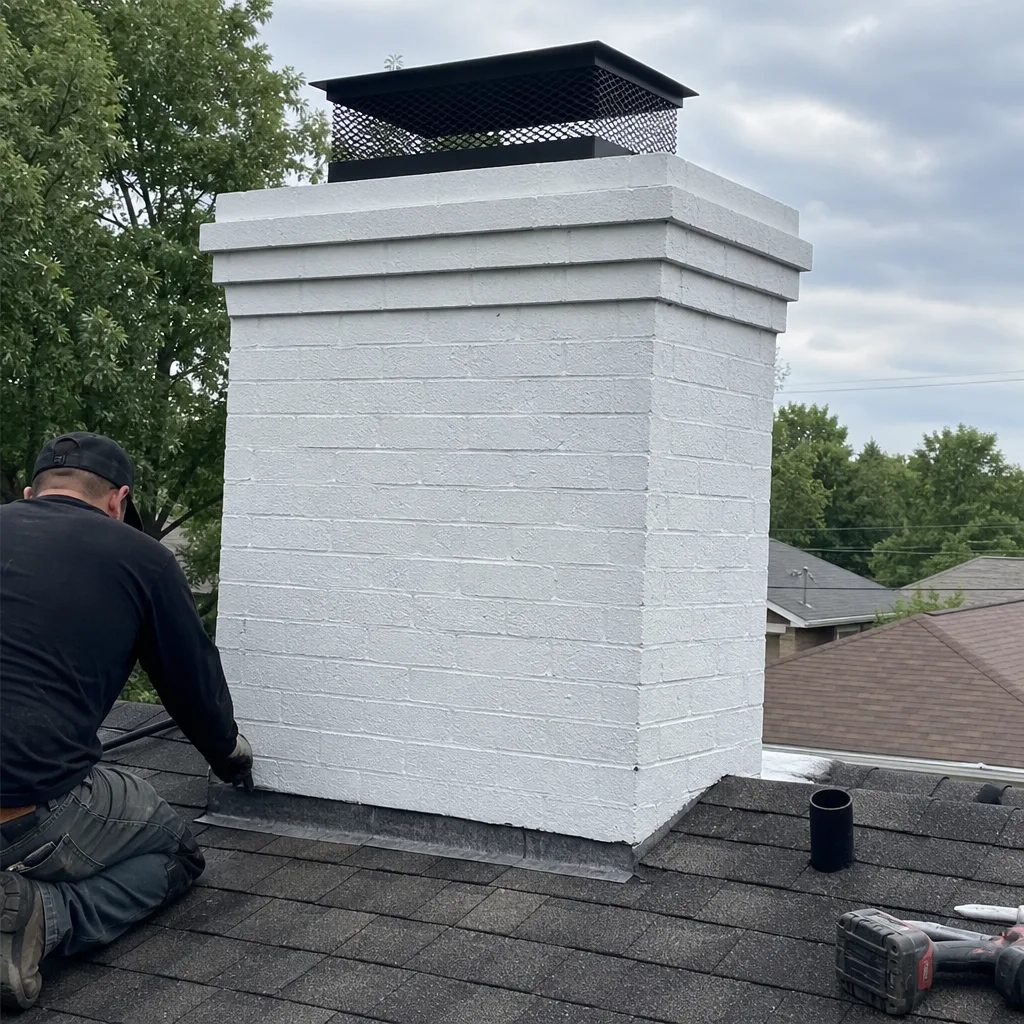
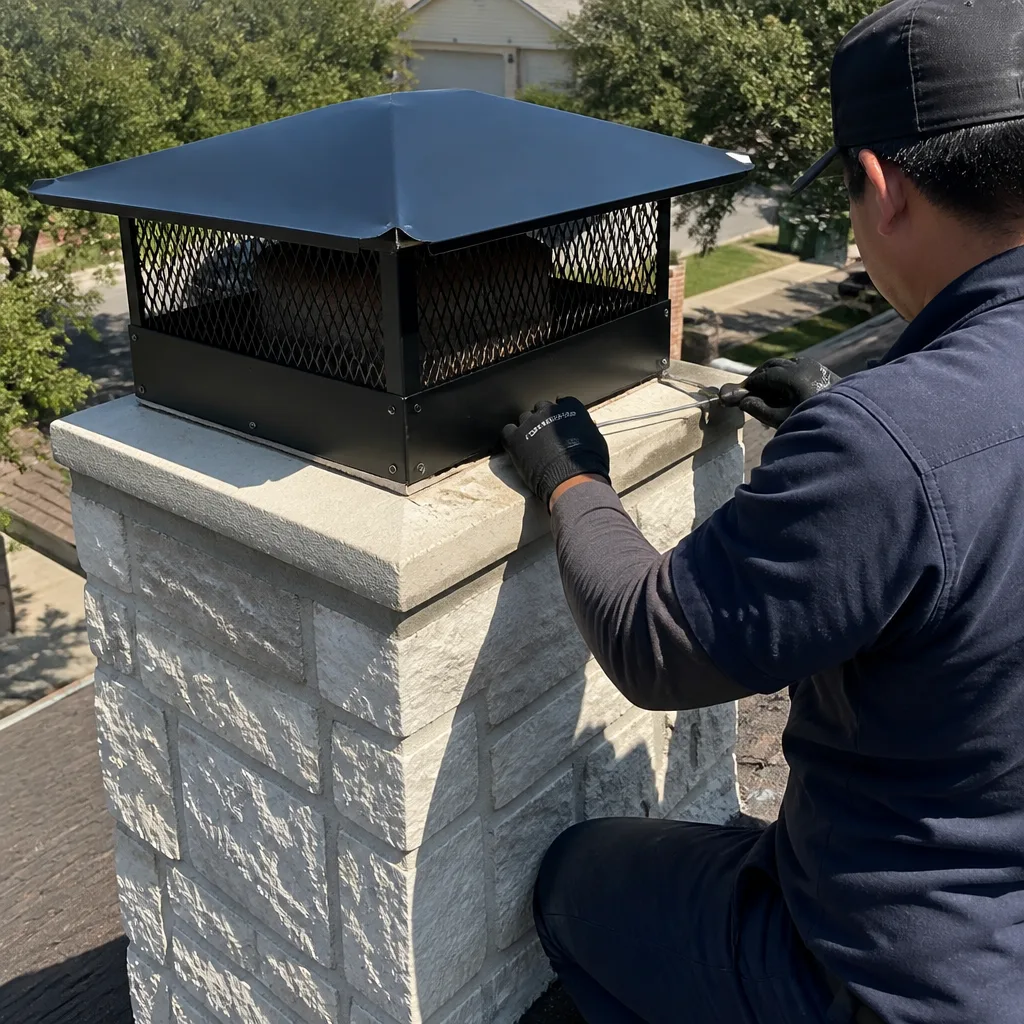
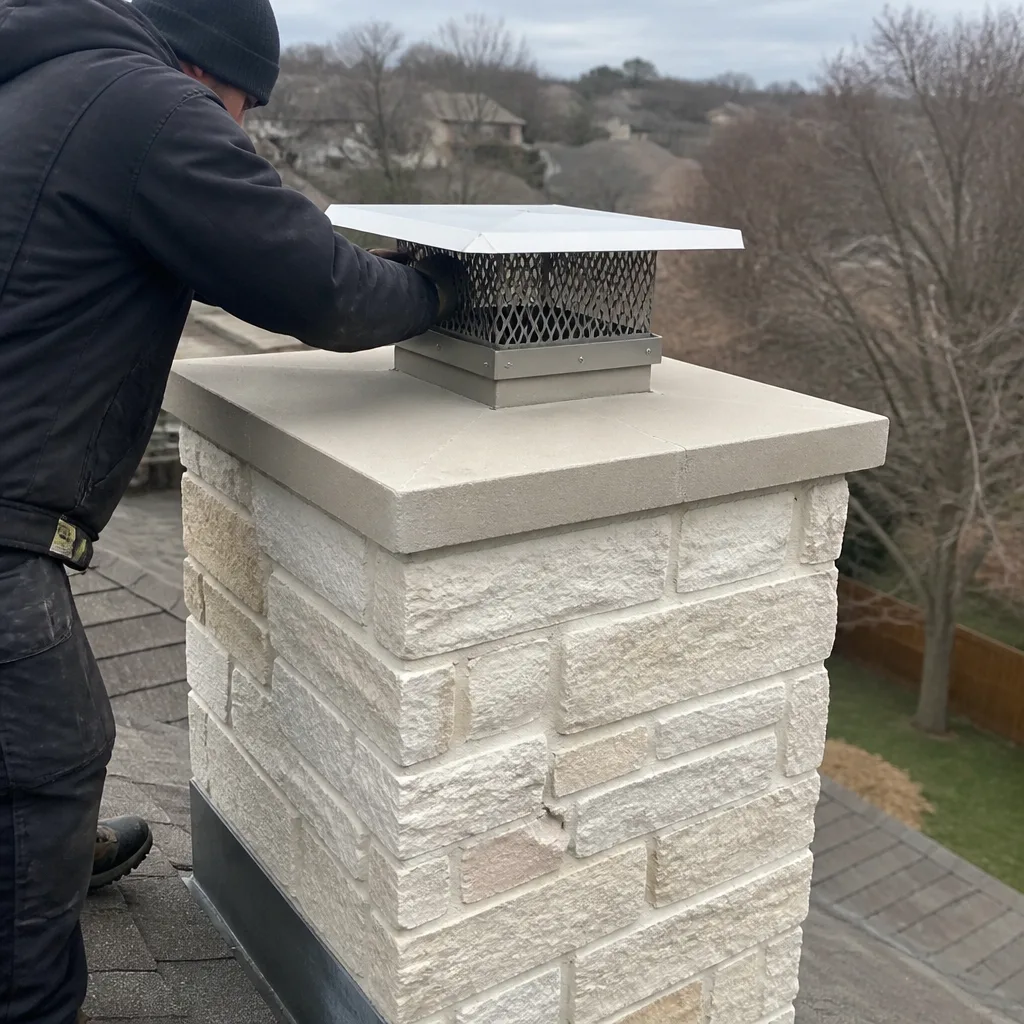
- Exterior check. We look at the crown, cap, and flashing on the roof to identify any water intrusion points.
- Documentation. You get photos and notes on what we found, plus a written summary of anything that needs attention now, anything to watch, and anything that’s fine.
The whole sweep usually takes 45 to 90 minutes in a standard Dallas home. If we’re also doing a Chimney Inspection in Dallas with camera equipment, that adds another 20 to 40 minutes. We never upsell anything without showing you the photos first. You see what we see.
How Often Should You Clean Your Chimney in Dallas?
The national guideline from the Chimney Safety Institute of America is to clean when there’s 1/8 inch or more of creosote buildup. For most Dallas homes, that threshold arrives after 50 to 70 burns. Since Dallas wood-burning season typically runs from late November through early March, and most people burn on weekend evenings and the occasional holiday, that translates to cleaning every 1 to 2 years.
But here’s the Dallas-specific reality: you can’t just go by a calendar. You go by what you burn and how you burn it.
- Seasoned oak or hickory? Burns hot and relatively clean. You might stretch to 2 years between sweeps.
- Mesquite or pecan from a roadside seller? Often not fully seasoned. Green wood creates more smoke, lower flue temperatures, and faster creosote accumulation. You might need annual cleaning.
- Duraflame logs or fire starters? Synthetic logs produce far less residue. If that’s all you burn, you can go longer between professional cleanings, but you should still get an annual visual check.
- Gas-only fireplace? No creosote, but soot and debris can still accumulate. A cleaning every 2 to 3 years is reasonable, and our Gas Fireplace Repair in Dallas team handles those systems differently than wood-burning chimneys.
Our rule of thumb for Dallas: if you burn more than two evenings a week during the season, schedule a cleaning every year. If you burn only a few times per year, every other year is usually fine, but don’t skip the camera inspection. The two services are different, and one prevents the other from becoming urgent.
What Chimney Cleaning Costs in Dallas
This is the question everyone asks, and we’ll give you real numbers. A standard chimney sweep in Dallas runs between $189 and $349. The low end covers a basic, accessible chimney with light creosote. The high end covers taller chimneys, steeper roof pitches, heavy Stage 2 or Stage 3 creosote, or chimneys that haven’t been cleaned in several years and require extra time and tooling.
Here’s what the typical cost breakdown looks like in Dallas, based on our pricing since 2002:
| Service | Typical Dallas Range | What Affects It |
|---|---|---|
| Standard chimney sweep | $189 – $349 | Flue height, creosote stage, roof access |
| Sweep + Level 2 camera inspection | $299 – $449 | Camera time, liner condition documentation |
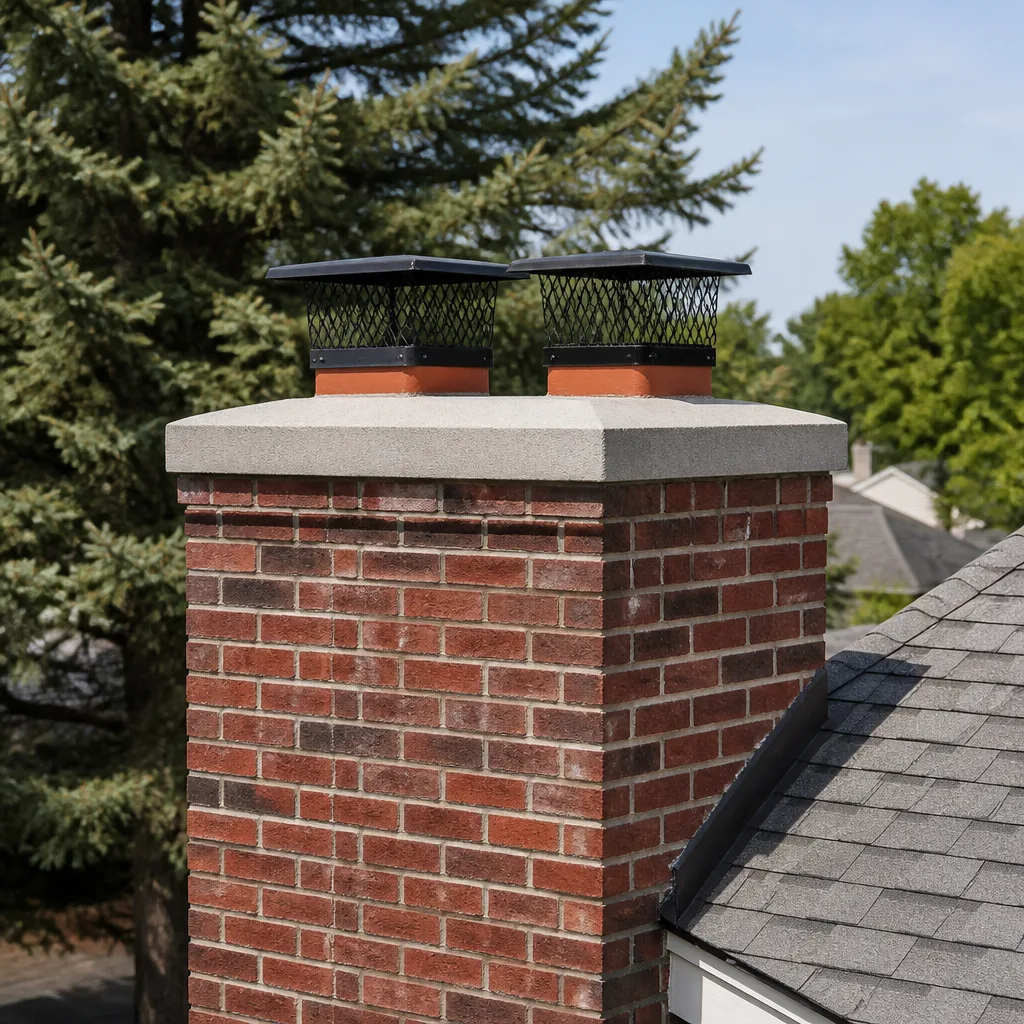
| Chimney cap replacement | $129 – $289 | Cap size, material (stainless vs. galvanized) |
| Crown repair (minor cracks) | $150 – $400 | Crack extent, material choices |
| Crown replacement | $800 – $1,800 | Square footage, structural condition |
| Damper replacement | $250 – $550 | Damper type, throat access |
| Stainless liner installation | $2,500 – $6,500 | Liner length, chimney height, system complexity |
| HeatShield resurfacing | $2,000 – $5,000 | Surface area, number of flue walls |
Those liner and resurfacing numbers are the big-ticket items, and they’re exactly where homeowners get overcharged by less scrupulous companies. We work with professional trade systems like DuraFlex and HeatShield because they’re what chimney professionals specify for long-term structural integrity, not box-store substitutes. But we never recommend a liner replacement without showing you the camera footage that proves it’s needed. You’ll see the cracks, the gaps, or the spalling yourself. If a company can’t show you the damage, don’t pay for the fix.
Every Alcott chimney sweep in Dallas includes a written price before any work begins. That’s a non-negotiable part of our process. If the price changes mid-job, that change is written down and approved by you before we touch anything else. No surprise charges at the end. That’s the whole point.
Why Dallas Chimneys Build Up Creosote Differently
Here’s the counterintuitive part: Dallas’s short, mild burning season is actually worse for creosote in some ways than a long, cold winter. The reason is temperature differential.
Creosote forms when smoke cools too quickly inside the flue and condenses on the liner walls. In a cold climate, the chimney gets hot and stays hot during long burning sessions, which keeps the flue temperature high enough to push most of the vaporized creosote out the top. In Dallas, you might light a fire on a 45-degree December evening when the masonry chimney itself has been sitting at ambient temperature all day. The flue starts cold, takes longer to heat up, and never reaches the same sustained temperatures as a chimney in a Minnesota winter. The result: more condensation per burn, more creosote per cord of wood, and a faster path from Stage 1 (flaky powder) to Stage 2 (tar-like glaze) than you’d expect from such a short season.
What you burn compounds this. Dallas has a lot of oak available, which is excellent firewood when properly seasoned. But we also see a lot of homeowners burning whatever’s cheap from the side of the road or a gas station bundle. Green wood, pine, and even some softwoods release more unburned vapor, which condenses more readily in a cooler flue. And because the burning season is short, many Dallas homeowners don’t think about firewood seasoning until they need it, then buy whatever they can find.
The practical takeaway: in Dallas, creosote risk is not proportional to how much you burn. It’s proportional to how hot your flue gets during those burns and how dry your wood is. A homeowner who burns 25 times with wet mesquite may have more creosote than a homeowner who burns 80 times with seasoned oak. This is why we tell every Dallas customer the same thing: don’t wait for the “recommended” interval. Get a visual check every year, even if you think you haven’t burned enough to need it.
How Dallas Clay Soil Affects Your Chimney
Dallas sits on expansive clay soil, specifically the Eagle Ford and Taylor formations that run through North Texas. That clay expands when wet and contracts when dry. During wet springs, the soil swells and pushes upward on your home’s foundation. During summer droughts, it shrinks and pulls away. This constant movement stresses every masonry structure attached to your home, and your chimney is the tallest, heaviest masonry element you have.
What does soil movement have to do with chimney cleaning? More than you’d think. Here’s the chain: soil movement shifts the chimney’s base slightly relative to the house, which opens hairline cracks in the crown (the concrete cap at the top of the chimney) and the mortar joints between bricks. Those cracks let water in. Water expands and contracts through freeze-thaw cycles (yes, Dallas does get below freezing several times each winter, even if only briefly) and through extreme summer heat, which widens the cracks further. Water reaching the flue liner deteriorates it faster, and a deteriorated liner holds creosote more aggressively and creates more places for dangerous gases to escape.
We see this in Dallas constantly. A chimney that would pass a visual inspection in Houston, where the soil is more stable, shows crown cracking in Dallas within a decade of construction. Homes built in the 1980s and 1990s in areas like Richardson, Garland, and south Dallas, where different soil pockets create differential movement, often need crown attention before their counterparts on more stable ground.
The cleaning connection is this: when we sweep your chimney, we’re not just removing creosote. We’re looking at the crown, the mortar, the flashing, and the overall structural alignment, because in Dallas, soil movement means your chimney’s water-intrusion points are constantly shifting. A cleaning is often the first time a homeowner learns their crown needs sealing, and catching that crown crack early is the difference between a $200 fix and a $1,800 replacement.
What a Dallas-Specific Inspection Should Check
A national chimney inspection checklist covers the basics: flue liner condition, creosote levels, damper function, cap presence, flashing integrity. Those are important everywhere. But a Dallas chimney inspection needs to go further, because our climate and geology create failure modes that a checklist written for a Michigan chimney never addresses.
Here’s what we specifically look for on every Dallas inspection, and what we recommend you ask about if you use another company. For help choosing a provider, see How to Hire a Chimney Cleaning Contractor in Dallas: A Step-by-Step Guide:
- Foundation-to-chimney alignment. In Dallas clay, we look for a visible gap between the chimney base and the house wall, or cracking where the chimney meets the roofline. Even a quarter-inch shift signals soil movement.
- Crown cracking from UV and thermal stress. Dallas summers hit 100+ degrees on the roof surface, then winter drops below freezing. That thermal cycling cracks cheap crown materials faster than in most of the country. We check for spider-web cracking across the entire crown surface, not just obvious chips.
- Brick spalling from moisture. Spalling is when the brick face flakes off. It happens in Dallas because moisture penetrates the brick, then summer heat expands it from inside. Spalled brick is both a structural issue and a water-intrusion issue that accelerates creosote problems inside the flue.
- Flue tile gaps from settling. Terra cotta flue tiles stack inside the chimney. When the chimney settles unevenly, those tiles separate, creating gaps where smoke and heat can escape into the chimney cavity. This is a fire hazard and a carbon monoxide hazard, and it’s more common in Dallas than in stable-soil regions.
- Cap condition against Dallas hail. North Texas gets hail, and chimney caps take a beating. We check for dents that compromise the spark arrestor and allow rain entry.
If a sweep company in Dallas isn’t checking foundation alignment and soil movement, they’re missing the main threat vector. This isn’t a nice-to-have. It’s the thing that makes a Dallas chimney inspection different from one in Ohio.
Exactly What to Expect: From Booking to Final Report
Most homeowners have never had their chimney cleaned before, or it’s been years, and they don’t know what the process looks like. Here’s the exact sequence when you book with Alcott Chimney Dallas, so nothing surprises you.
- You call (361) 264-4483. A live person answers. No voicemail, no callback queue, even at 11 p.m. when you smell smoke and need to know if it’s safe.
- You get a name and photo. When we schedule the visit, we tell you which technician is coming. You’ll see their name and photo before they arrive. Every technician passes a background check and identity verification through the Threshold Standard, and they’ll show a photo ID badge at the door. That’s not optional, and we’ve done it this way since 2002 as part of the Threshold Group family of home-service companies.
- We arrive in a marked vehicle. The technician introduces themselves, confirms the work you booked, and lays out the protection over your hearth and floor area.
- You get a written price before work starts. This is the price. If the technician finds something during the inspection that needs attention, you’ll see the camera photos and get a written quote for that additional work before anything else happens. You approve it or you don’t. There’s no pressure.
- The sweep happens. 45 to 90 minutes for most Dallas homes. We’re running brushes through the flue, cleaning the smoke chamber, checking the damper, and inspecting the crown from the roof.
- You receive documentation. After the cleaning, you get written notes on what was done, what was found, and what we recommend for the future. If we did a camera inspection, you get photos showing exactly what we saw. You keep those. They’re yours.
- Guarantee details are confirmed in writing. Every repair we do carries a written guarantee. If that repair fails within the coverage period, the second visit is free. We tell you what’s covered and for how long before you pay anything.
That’s it. No surprises, no bait-and-switch, no “we found something serious and you need to decide right now.” You’ll know who’s coming, what it costs, what was found, and what happens next.
How Our 365-Day Done Right Promise Works in Plain Terms
We’ve put a name on it: the 365-Day Done Right Promise. It means we stand behind the work for a full year after it’s completed. Not vague “satisfaction guaranteed” language. Specifics.
Here’s what it covers in plain dollars: if we repair your chimney and that repair fails within 365 days, we come back and fix it at no charge. The parts, the labor, the visit, all of it. If we replace a liner and it develops a fault within a year, we’re back out to make it right. If we reseal a crown and it cracks again within the year, the second visit is free. You don’t have to fight for it. It’s written on every repair quote, and it’s included with every job at no extra charge.
What it doesn’t cover: normal wear and tear, damage from events like hail that’s a new incident rather than a failure of our work, or issues that existed before we did the job and were already documented as outside the scope of the repair. If you have a question about whether something’s covered, call us. A live person answers, and we’ll tell you straight.
The reason this matters in Dallas specifically: soil movement means some crown and mortar repairs are working against constant, ongoing stress. A crown sealed in May might see new micro-cracks by the following April just from the freeze-thaw cycle, even if the work was done correctly. Our guarantee means we’ll tell you if that’s what happened, and if it’s a workmanship issue, we’ll fix it. You’re not paying twice for the same repair in a climate that’s constantly testing your chimney’s structure.
Common Mistakes to Avoid
- Assuming low burn frequency means no creosote. As we covered above, Dallas’s cool-flue problem means 30 burns with the wrong wood can produce Stage 2 creosote. Don’t use burn count as your only signal.
- Buying green “seasoned” wood from a parking lot. If the wood’s not dry, it doesn’t matter what the seller says. Green wood cools your flue faster and condenses more creosote. Buy from a reputable supplier or season it yourself for at least six months under cover.
- Ignoring crown cracks because “it’s just cosmetic.” In Dallas, a hairline crown crack becomes a water-intrusion path within one season of freeze-thaw cycling. That water accelerates liner deterioration and turns a $200 crown seal into a $4,000 liner replacement.
- Letting a contractor “clean” your chimney without showing you photos. If they can’t show you what’s inside your flue, you can’t verify anything they’re recommending. Camera inspection is not an upsell; it’s how you prove the work is needed.
- Calling the cheapest option without checking identity verification. You’re letting someone into your home, often when you’re alone. The company should tell you who’s coming before they arrive and that person should show ID. That’s the Threshold Standard we’ve held since 2002, and you should expect it from anyone you hire in Dallas.
- Skipping annual inspection because you have a gas fireplace. Gas systems don’t make creosote, but they can develop soot buildup, blocked vents, and carbon monoxide issues. They still need periodic professional attention.
- Burning pine or cedar because it’s cheap and available. Softwoods burn fast and cool, and their resin produces more unburned vapor. In a Dallas chimney that already runs cooler than average, that’s a recipe for rapid creosote accumulation.
When to Call a Professional
Some chimney issues you can spot yourself. Others need a trained eye. Call a professional when you notice any of these: smoke backing up into the room during a fire, a strong campfire smell when the fireplace isn’t in use, visible black or shiny brown glaze on the inside of your chimney above the firebox, chunks of brick or mortar on the roof or ground near the chimney, or water stains on the ceiling or walls around the chimney. These all indicate something is wrong, and waiting usually makes the repair more expensive. If you smell smoke in the house when there’s no fire burning, that’s a call to make today, not next week. Alcott Chimney Dallas offers free estimates in Dallas, and a live person answers the phone around the clock at (361) 264-4483.
Frequently Asked Questions
A standard chimney sweep in Dallas costs between $189 and $349, depending on chimney height, roof access, and creosote stage. Sweeps paired with a camera inspection run $299 to $449. Every Alcott job includes a written price before work begins, so there are no surprises at the end. Call (361) 264-4483 for an exact quote – estimates are free.
Most Dallas homeowners should have their chimney cleaned every 1 to 2 years, or after 50 to 70 burns, whichever comes first. For a full maintenance calendar, see our Seasonal Chimney Cleaning Care for Dallas: Year-Round Homeowner’s Guide. Because Dallas chimneys run cooler during short, mild burning seasons, creosote accumulates faster per burn than in colder climates. If you burn more than two evenings a week during the season, clean it annually.
You only need a new liner if the existing one is cracked, separated, or missing sections, and those conditions should be visible on camera footage shown to you before any liner quote. In Dallas, soil movement can separate terra cotta flue tiles over time, making liner replacement a legitimate need in some homes. But a legitimate company will show you the damage. If they won’t, don’t approve the work. We install DuraFlex stainless liner systems when replacement is genuinely needed, and every quote includes the camera evidence.
Creosote continues to build until it reaches Stage 3, a thick, shiny, hardened glaze that’s both flammable and difficult to remove. A chimney fire becomes a real possibility, and those fires can reach 2,000 degrees, destroying the liner and spreading to the house structure. Water intrusion also accelerates when the chimney isn’t inspected regularly, leading to masonry damage that costs thousands more than a sweep. The $250 cleaning you skip can become a $5,000 liner replacement within two years.
A brief whiff of smoke when you first light a fire on a cold Dallas evening is common, because the flue needs time to warm up and establish an upward draft. But persistent smoke entering the room, or smoke that gets worse after the fire is established, indicates a draft problem, a blockage, or a partially closed damper. That’s not normal, and you should have it checked before using the fireplace again.
We’ve been serving Dallas since 2002, and every technician who arrives at your home has passed a background check and identity verification, wears a uniform, and is announced to you by name and photo before the visit. You’ll see a written price before work starts, and every repair carries a written guarantee. If a repair fails within 365 days, the second visit is free. A live person answers our phone around the clock, because sometimes the problem doesn’t wait for business hours.
The Bottom Line
Dallas chimneys face a specific set of challenges: cool-flue creosote from mild winters, clay soil movement that opens cracks, and summer heat that accelerates every problem. The fix is not complicated. Clean annually if you burn regularly, inspect annually even if you don’t, and work with a company that shows you the camera evidence before recommending repairs. Every Alcott sweep comes with a written price, a written guarantee, and a technician you know by name and photo before they arrive. That’s what we’ve done in Dallas since 2002, and it’s what you should expect from anyone you let on your roof. Call (361) 264-4483 for a free estimate, or explore our Chimney Sweep in Dallas page for more detail on how we work. If you’re not sure whether you need a sweep or a full inspection, start with our Alcott Chimney Dallas home page to see everything we offer.
Written by Ruben Castellano, Owner at Alcott Chimney Dallas, serving Dallas since 2002.
See the difference
 Before
 After
After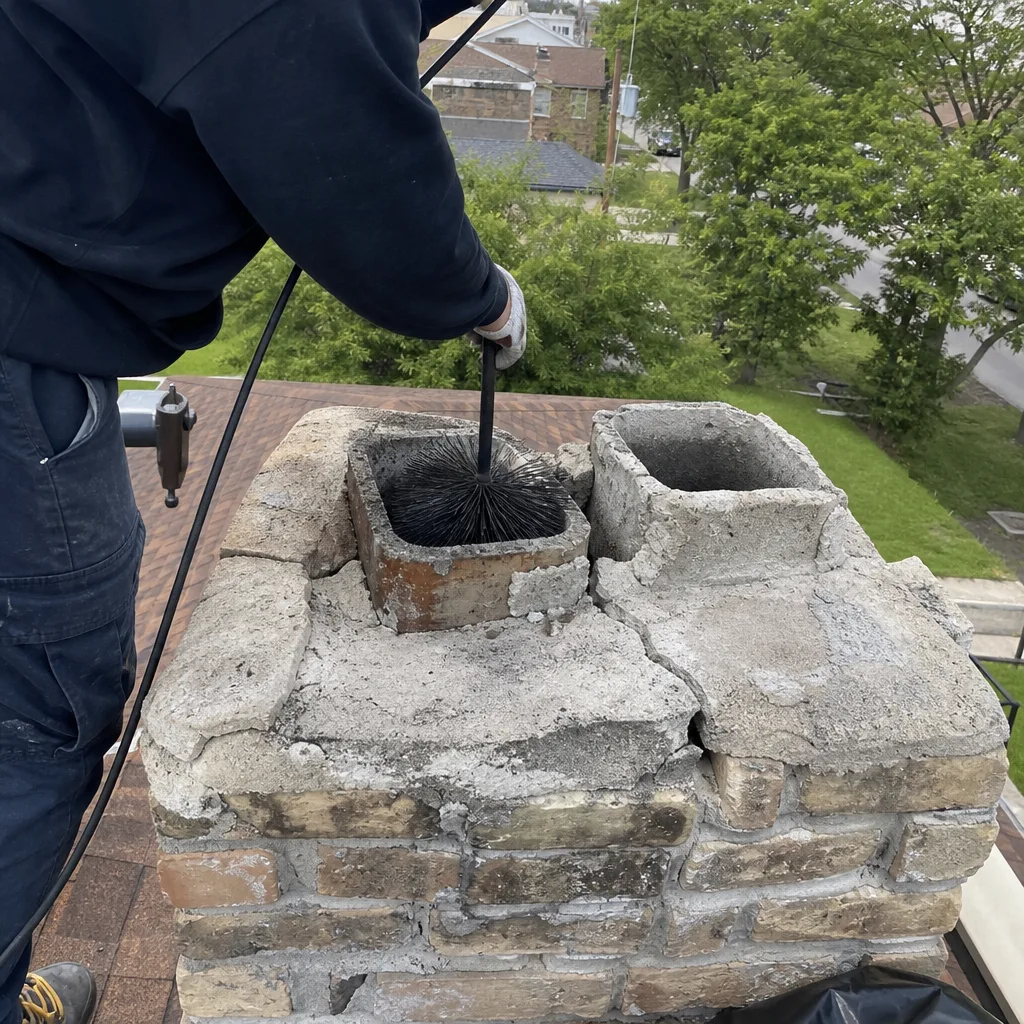 Before
 After
After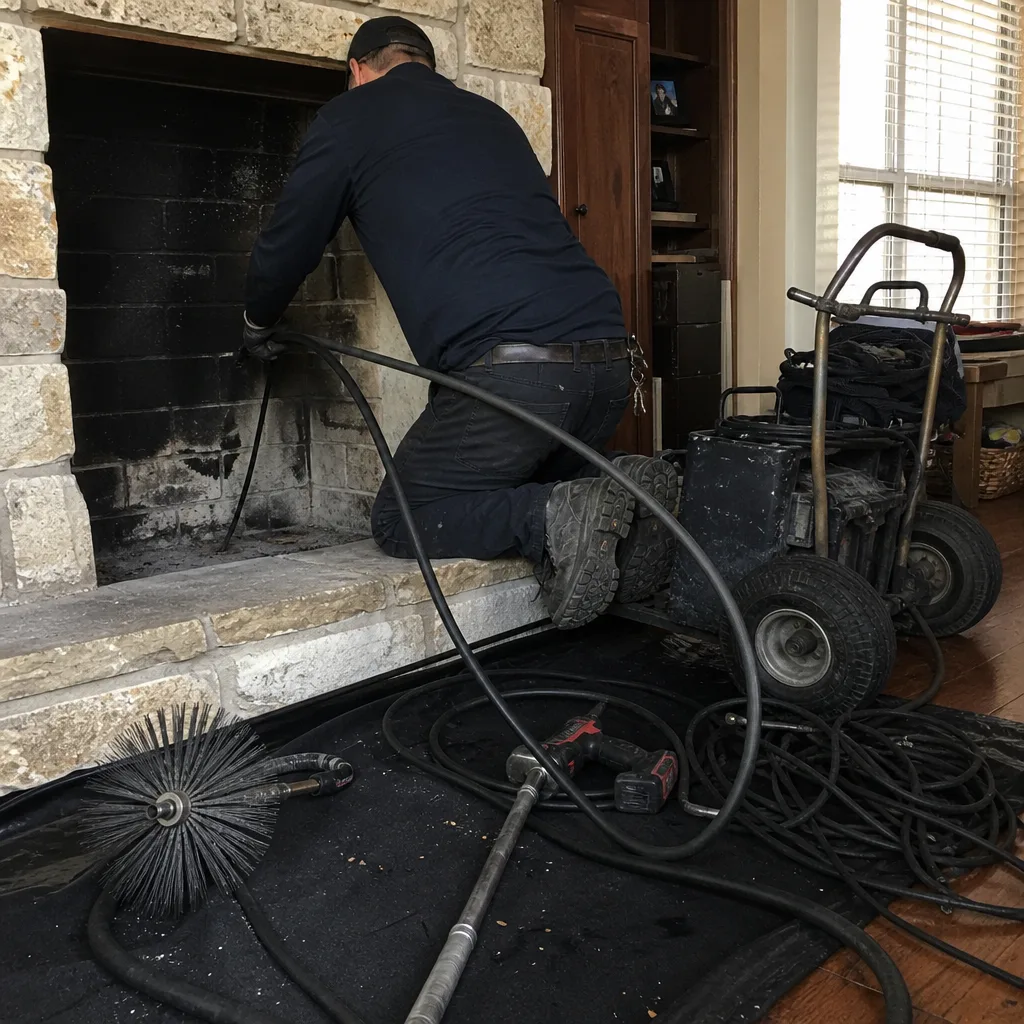 Before
 After
After